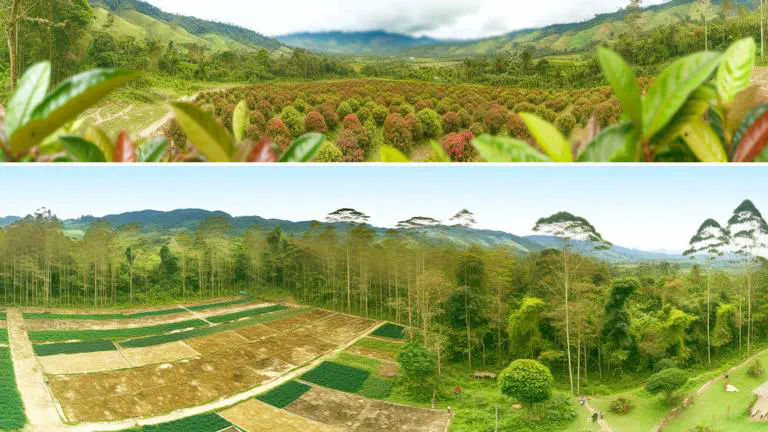
Why cardamom is ideal for agricultural diversification
Agricultural diversification in Colombia is a key strategy for mitigating price, pest and climate-related risks. For farmers in the Coffee Region (Eje Cafetero), incorporating cardamom can be a viable alternative due to its international demand, its compatibility with shade systems and the market profile that can offer additional income. In this article we will review, based on technical guides and studies applicable to the region, how cardamom helps reduce risks, what should be considered in production and marketing and sales, and practical steps for evaluating its incorporation into your farm.
Executive summary
- Cardamom is a spice with high commercial value in international markets; its cultivation can complement coffee production and improve income stability.
- In shade and agroforestry systems, cardamom has demonstrated adaptability, which facilitates its integration into coffee farms in the Coffee Region.
- Commercial production normally begins from the third year onwards; financial planning must integrate establishment and maintenance costs per hectare.
- Access to international markets requires attention to traceability, certifications and processing and drying processes.
1. Agricultural diversification and risk mitigation: why it matters
Agricultural diversification in Colombia seeks to reduce the farm’s exposure to price and yield fluctuations. For producers in the Coffee Region, whose economy has historically depended on coffee, introducing a crop with a different market profile helps to:
- Spread economic risk when coffee prices fall.
- Adjust labour and cash flow around different harvest seasons.
- Make use of shaded areas and soils with conditions similar to those for coffee.
Cardamom, owing to its demand and its capacity to be grown under shade, fits these objectives and aligns with agricultural diversification strategies in Colombia focused on resilience.
2. Compatibility with the Coffee Region: what the guides say
Several technical documents and guides show that cardamom can develop at altitudes and in climatic conditions similar to those for coffee cultivation and that it tolerates levels of shade that facilitate its integration into agroforestry systems. These sources highlight that cardamom benefits from soils with good organic matter content and humid microclimates, characteristics present in many coffee-growing areas of the country.
In addition, the practice of establishing a mother plantation and selecting healthy vegetative material are documented steps to ensure quality and productivity in commercial plots. These procedures and record-keeping formats are part of the good practices for starting sustainable production.
3. Economic aspects: costs, timeframes and break-even points
Before starting a diversification project with cardamom, it is essential to incorporate realistic estimates of costs and time to production:
Start-up and maintenance: cost guides per hectare provide examples of investment in land preparation, inputs, labour and shade maintenance, broken down by year for planting and maintenance stages. These documents serve as a reference for identifying expense items and planning cash flow.
Time to production: cardamom seed production normally begins from the third year onwards; the guide indicates that this period extends until the recommended plantation renewal between 12 and 15 years. This means that return on investment must be assessed over a multi-year horizon.
Practical examples: cost-per-hectare templates show specific line items (labour, inputs, transport and harvesting) and examples of income per harvest in subsequent years, which make it possible to build cash-flow scenarios. Use these internal references to adjust figures to your local reality (labour, land rental, etc.).
Important: the numerical values included in guides must be updated with local quotations and with the cardamom price in force in 2025 in order to estimate the Colombian cardamom price per kilogram 2025 and determine economic viability.
4. Market and export opportunities
The cardamom market in Colombia and the region shows demand in international markets, with importing countries interested in the quality, colour and aroma of the pod. Manuals and guides analysing marketing and sales recommend:
- Conducting market studies to identify niches (organic, gourmet, fair trade).
- Preparing processing and drying processes that preserve quality and allow export requirements to be met.
- Considering certifications and traceability as tools for accessing markets with premium prices; these involve costs and processes that must be incorporated into the business plan.
There are cardamom export opportunities from Colombia to international and Latin American markets, provided that the value chain (producers, processors and exporters) coordinates quality, compliance with requirements and logistics. Guides and project experiences show that developing networks and cooperatives facilitates marketing and sales in target markets.
5. Requirements, certifications and steps for exporting
For cardamom exporters in Colombia, it is advisable to plan traceability and quality from the outset. Practical recommendations include:
- Documenting origin and management practices in records (mother plantation records, planting date, treatments).
- Assessing infrastructure needs: drying facilities and processing processes to preserve aroma and colour; this impacts price and acceptance at destination.
- Considering certifications (organic, fair trade, Good Agricultural Practices) according to the target market; each certification has requirements and costs that must be incorporated into the guide on exporting cardamom from Colombia: steps and costs.
The basic export steps include ensuring quality standards, packaging and compliance with the phytosanitary and documentary requirements of the importing country; relying on local actors (exporters and foreign trade agencies) accelerates access to markets.
6. Agronomic management and good practices (technical summary based on guides)
The technical guides consulted recommend practices that favour productivity and reduce phytosanitary risks:
- Plantation design and shade management: cardamom is successfully grown in systems with controlled shade; the agronomic guide details recommendations on types of shade and pruning to regulate microclimate.
- Mother plantation and material selection: establishing a mother bank with healthy rhizomes is key to ensuring uniformity and health of the planting material. The recommended record sheets and formats for mother bank control help maintain traceability.
- Weed control, plant health and record-keeping: integrated management (cultural, biological and, when necessary, chemical) and the creation of records make it possible to mitigate outbreaks and optimise interventions. The guides include lists of common pests and diseases and how to monitor them.
Note: detailed agronomic recommendations not explicitly stated in the guides are not included here; for specific pest management, fertilisation or dosage, consult local technical sources and your trusted agronomic advisor.
7. Logistics, processing and agro-industry
The cardamom agro-industry in Colombia requires attention to post-harvest processes: harvesting at the optimal point, drying that preserves colour and aroma, and storage under suitable conditions for export. Cost documents and processing guides describe the need for basic infrastructure (drying facilities, storage spaces, packaging) and its impact on final quality.
In addition, coordinating the chain with suppliers, processors and exporters facilitates access to international markets and improves negotiating power, which is key to obtaining better prices per kilogram.
8. Practical strategies for mitigating risks when diversifying with cardamom
Financial planning: build scenarios with establishment and maintenance costs (e.g.: labour, inputs and shade maintenance) and calculate the time to the first commercial harvest (from year 3 onwards). Use cost templates as a reference and adapt them to your context.
Mother plantation and controlled propagation: guaranteeing quality material reduces phytosanitary risks and yield variability. Keep regular records to monitor health and vigour.
Agroforestry systems: integrating cardamom into shaded plots helps make use of marginal spaces or areas where coffee may have lower profitability, reducing total loss in the face of market fluctuations.
Diversified marketing and sales: identifying local channels (domestic consumption, regional markets) and external channels (exporters and premium niches) reduces dependence on a single buyer. Working in an associative manner or with cooperatives improves access to export services.
Certifications and quality: assess whether organic or fair trade certifications are viable for your farm, as they increase access to markets with better prices, although they involve initial costs.
9. How to get started: practical steps for farmers in the Coffee Region
- Farm diagnosis: review altitude, shade levels, water availability and soil quality to verify compatibility with the recommendations set out in the technical guides.
- Draw up an economic plan: use cost-per-hectare templates as a basis for calculating initial investment and cash requirements for the first few years.
- Selection of plant material: establish or acquire verified mother plantation material and record its origin.
- Training and technical assistance: seek support from technical guides, productive chain strengthening projects and local technicians to minimise establishment errors.
- Coordinate market access early on: contact exporters, processors and potential buyers; assess export requirements and certifications.
10. Cases and experiences applicable in the region
Projects and technical materials show experiences of productive chain strengthening, plantation design and marketing and sales models that can be adapted to the Coffee Region. In addition, training initiatives and specialised tours have served to train and connect producers with buyers and investors. These experiences are useful as a reference for those evaluating how to diversify agriculture with cardamom in Colombia.
Conclusion
Incorporating cardamom as part of an agricultural diversification strategy in Colombia can be an effective tool for mitigating economic and productive risks on coffee farms in the Coffee Region. The technical guides and cost sheets available make it possible to build solid plans: from designing the mother plantation to financial planning and market engagement. The key lies in realistically planning the timeline for the start of production (from the third year onwards), ensuring healthy material, and defining marketing and sales routes and compliance with export requirements if international markets are the goal.
Explore how to diversify your farm with cardamom.
Which aspects of your farm do you think would benefit most from integrating cardamom as a diversification crop?
About the author
Juan Pablo Toro López is an Agro-Industrial Engineer (Universidad La Gran Colombia) with more than 15 years of experience in the food production chain: production, food safety, process standardisation and export requirements. He has been an agro-industry lecturer at SENA and at universities such as Universidad Andina and Fundación Universitaria San Martín, and a digital marketing and sales consultant for companies in the sector.