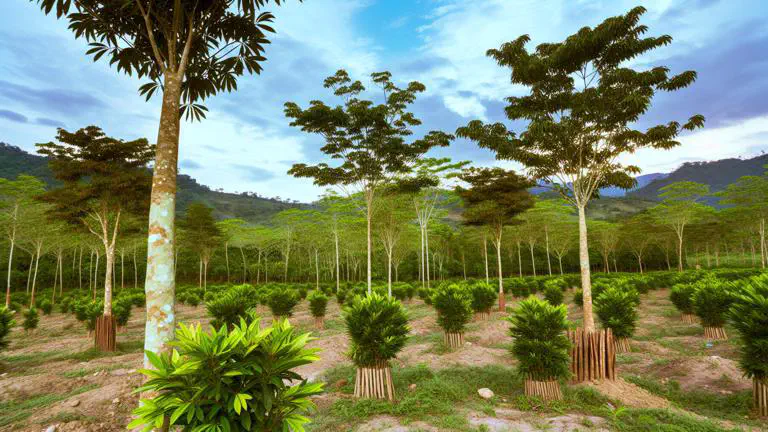
Sustainable cardamom production in Colombia
Sustainable cardamom production is an opportunity to diversify income, conserve natural resources and strengthen local value chains. This article addresses the agroforestry model as the central approach to sustainable cardamom production in Colombia, with practical information for farmers, NGOs and agro-exporters. Throughout the text, management principles, integrated pest control, considerations for marketing and sales, and relevant aspects of responsible export are presented.
1. Why invest in sustainable cardamom production
Cardamom is a high-value spice in international markets and can be integrated into agroforestry systems that promote soil conservation and biodiversity. In Colombia, the crop has been studied as a productive alternative compatible with areas that have suitable climatic and edaphic conditions, offering a window to diversify agricultural production without resorting to indiscriminate deforestation. Local assessments highlight the feasibility of incorporating cardamom into agroforestry systems with native and timber species to generate additional income, while maintaining live shade and organic matter in the soil.
2. Agroforestry model and sustainability principles
The agroforestry model for cardamom combines the planting of Elettaria cardamomum with tree species and service species that provide shade, humus and ecosystem services. Among the key principles for a sustainable mother stock bank and for the regeneration of the system are: replenishing the organic matter extracted, rotating extraction zones, maintaining live shade with native trees, efficient water use, and technical recording of production practices. These recommendations form part of practical guides that promote both ecological sustainability and long-term profitability.
3. Climate, zoning and recommended regions in Colombia
Cardamom develops under climatic conditions similar to other tropical shade crops. For a practical guide on the climate and growing regions for cardamom in Colombia, it is essential to start with ecological zoning and soil analysis (texture, organic matter and drainage). Local studies show that the crop tolerates significant levels of shade (up to 60–63%), which facilitates its integration into forested landscapes or on farms seeking to strengthen tree cover. Before establishing a plantation, it is advisable to assess microclimate, slope and water availability, and to carry out a soil analysis to determine appropriate amendments and fertilisation rates.
4. Propagation, planting and mother stock bank
Propagation by rhizomes and the establishment of a mother stock bank are practices that enable the production of quality, traceable material. A well-managed mother stock bank must adhere to principles of biosecurity, rotation and replenishment of organic matter. Mother stock bank scales vary according to purpose: from small areas for self-propagation to units of 3–5 ha aimed at supplying nurseries and projects, which require certification and formal records.
Key strategies:
- Gradual production of mother plants (for example, ¼ ha per year) to scale up without losing sanitary control.
- Use of rhizomes sourced from disease-free farms and disinfection of planting areas using simple practices such as lime or ash when the protocol indicates.
- Recording and traceability of material to facilitate certification processes or the sale of certified rhizomes to third parties.
5. Soil management and organic fertilisation
Conserving fertility and moisture in the surface layer of soil is critical. Recommended practices include:
- Mulching with leaves from shade trees to conserve moisture and provide organic matter. Mulch is applied especially in November–December to cushion the dry season and favour pollination by exposing the inflorescence over the humus.
- Incorporation of compost, bocashi and other locally produced bio-inputs to enrich nutrient availability and improve soil structure. Studies on organic fertilisers and vermicompost document benefits for soil fertility and biodiversity.
- Use of live ground cover (shallow-rooted legumes) to fix nitrogen, reduce weeds and contribute organic matter without strongly competing with the cardamom.
6. Integrated control of weeds, pests and diseases
Sustainable production requires prioritising cultural and biological methods before the use of agrochemicals:
- Weed control: favour shade and apply mechanical control; replace weeds with live ground cover to reduce labour and conserve soil. Avoiding herbicides should be preferred practice in sustainable systems.
- Pests: thrips (Sciothrips cardamomi) is a significant pest in cardamom. Integrated management programmes include the conservation of natural enemies (lacewings, predatory mites, Orius sp.), the use of plant extracts (neem or others) and bioinsecticides such as spinosad in formulations authorised for organic agriculture. These alternatives make it possible to control thrips with lower environmental impact and reduce residues in harvested capsules.
- Diseases: cultural practices such as sanitary pruning, burning of infected plant residue and management of plant waste are standard preventive measures. In necessary cases, some technical sources mention the restricted use of products (mancozeb, copper sulphate) under protocols and only when benefits outweigh risks, but the preferred strategy should be prevention and strengthening the health of the agroforestry system.
7. Harvest, processing and product quality
The commercial quality of cardamom depends on harvesting at the optimal point and on processing and storage procedures that preserve aroma and colour.
Proper processing after harvest — drying, cleaning and packing — is essential to access demanding markets and to maintain the freshness valued by international buyers. A fast, controlled drying process favours aroma and colour, attributes that influence demand and price in the cardamom trade.
8. Market, trade and responsible export
The cardamom market is competitive and sensitive to quality, traceability and labelling. In the region, countries such as Guatemala and India lead exports, but demand in markets in the Middle East, Europe and North America opens opportunities for Colombian producers offering a differentiated, responsibly certified product. Promoting domestic consumption and diversifying related products (essential oils, extracts) are also valid strategies for adding value locally.
On how to export cardamom from Colombia to international markets and the requirements for exporting cardamom from Colombia, trade guides recommend complying with phytosanitary standards, traceability documentation, and packaging and quality requirements demanded by destination markets. Obtaining sustainability certifications and labels such as organic or fair trade can increase the value of the product, but requires strict compliance with protocols and external audits.
The logistics of exporting cardamom from Colombia must take into account moisture control, transport times and customs documentation. The cardamom value chain in Colombia can be strengthened through associations, cooperatives and joint marketing and sales schemes that facilitate access to cardamom importing markets in Latin America and beyond.
9. Certification, financing and costs
Sustainability certifications for cardamom in Colombia (including organic criteria) require management records, input control and traceability; the requirements for organic certification of cardamom in Colombia include field audits and compliance with documented organic practices. Obtaining these certifications can open markets with greater willingness to pay premiums for quality and sustainability, but involves administrative costs and the adaptation of production processes.
Regarding financing for cardamom plantations in Colombia and the production cost of cardamom in Colombia, strategies to reduce costs include producing one’s own bio-inputs (compost, ferments, bocashi), making use of live ground cover, and joining together in collective purchasing or cooperatives. Scaling models and associations make it possible to spread investments in infrastructure and access to certifications when several producers organise themselves into joint projects.
10. Business opportunities and benefits for small farmers
Business opportunities for cardamom in Colombia include production for niche markets (organic, high quality), the sale of sanitised material (certified rhizomes) and product diversification (oils, extracts). Sustainable cardamom production for small farmers can translate into additional income, reduced pressure on forests and the recovery of degraded farms through agroforestry systems that increase organic matter and resilience to seasonal droughts.
Benefits observed in studies include the possibility of integration into farms with permanent crops and the generation of local employment, especially when mother plant production is established and labour is trained for technical management and simple harvest processing.
11. Varieties, selection and genetic improvement
Cardamom varieties grown in Colombia require the selection of quality material and multiplication programmes to ensure healthy plants. Local characterisation and selection work has been documenting materials adapted to Colombian conditions; the availability of quality seed and rhizomes is a central element in ensuring yield and traceability throughout the production chain.
12. Practical recommendations for implementing a sustainable agroforestry system
- Carry out a prior assessment of the site (soil, slope, water availability) and a soil analysis to guide amendments and fertilisation.
- Design the agroforestry system with native service shade species (which provide leaf litter and microclimatic stability) and plan mulch management to conserve moisture and nourish the soil.
- Establish a mother stock bank with traceability and plot rotation; replenish organic matter and rotate rhizome extraction zones to allow system regeneration.
- Prioritise integrated pest control: conservation of natural enemies, use of plant extracts and authorised bioinsecticides when necessary; avoid broad-spectrum agrochemicals that destroy beneficial organisms.
- Strengthen post-harvest processing to protect quality and access niche markets; document traceability from the plot through to packing.
- Evaluate associative schemes (cooperatives, consortia) to access certifications, financing and better marketing and sales conditions.
13. Conclusion
Sustainable cardamom production in Colombia, grounded in agroforestry models, offers a path to combine productivity with environmental conservation and local value generation. The available technical evidence supports practices such as the use of live shade, mulching, well-managed mother stock banks and an integrated approach to pest and disease management. For farmers, NGOs and agro-exporters, the key lies in adopting documented techniques, recording processes and working together to access markets that value sustainability and product quality.
Implement sustainable practices in your crop.
Which agroforestry strategy do you think would be most viable for your farm or project in Colombia, and why?
About the author
Juan Pablo Toro López is an Agro-industrial Engineer (Universidad La Gran Colombia) with more than 15 years of experience in the food production chain: production, food safety, process standardisation and export requirements. He has been an agro-industry lecturer at SENA and at universities such as Universidad Andina and Fundación Universitaria San Martín, and a digital marketing and sales consultant for companies in the sector.