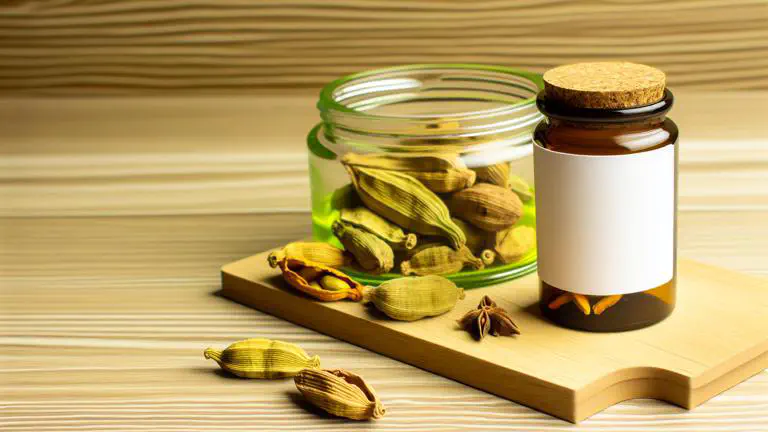
Medicinal benefits of Colombian cardamom
Cardamom is one of the most highly prized spices for its aroma and for the bioactive compounds contained in its seeds and essential oils. In the Colombian context, interest from the health sector and international markets in cardamom grown in Colombia has grown, both because of its functional potential and the production conditions that offer differentiated quality characteristics. In this article we detail the relationship between origin and health: what we know about the medicinal properties of Colombian cardamom, how it is used in clinical and popular practice, and which elements of the production and marketing and sales chain support its value for the health sector.
Throughout the text we will integrate evidence and descriptions from technical documents and primers on cardamom covering everything from chemical composition to aspects of quality and marketing and sales, always citing the local and technical sources available. For example, the technical primer gathers nutritional characteristics and some traditional health applications, while documents on trade and coding offer context on markets and export requirements.
What cardamom is and why its origin matters
Cardamom (Elettaria cardamomum) is a spice traded mainly for its green pods and the aromatic seeds they contain, which hold essential oils and terpenes. In Colombia, commercial production has developed that takes advantage of shade conditions and mountain climates, which influences the organoleptic and quality characteristics of the fruit. Technical documents on cultivation in Colombia describe the species, its development under shade, and the soil and climate conditions that favour local production.
The relevance of origin is not only commercial: factors such as post-harvest management (drying times, handling during processing) and production practices affect the concentration and preservation of essential oils and bioactive compounds that support health and wellness applications, according to the technical literature reviewed. This origin–quality connection is key when discussing the medicinal benefits of cardamom grown in Colombia and its positioning in demanding markets.
Chemical components and documented properties
The analyses and technical primers compiled on the cultivation and use of cardamom note the presence of essential oils and a mix of terpenes (cineole, terpineol, sabinene, limonene, pinene, among others) that give it aroma, flavour and functional properties. Nutritional components are also recorded: low calorie content, presence of B-complex vitamins and trace vitamin C, fibre and phytochemicals with antioxidant activity. These observations appear in technical publications and primers on the species.
These substances (essential oils and terpenes) are the ones that have been associated, in the technical literature and in traditional uses, with effects such as digestive support, reduction of flatulence, antioxidant properties and favourable effects on oral health. It should be emphasised that the descriptions of effects in the documents consulted come from compilations of traditional uses and composition studies, and therefore must be interpreted within that framework.
Documented medicinal benefits and their clinical and traditional application
Based on the technical documents available, the following describes the medicinal benefits attributed to cardamom that are relevant to health sector professionals:
Digestion and relief of gastrointestinal discomfort: the technical literature and primers record the traditional use of cardamom to stimulate appetite, aid digestion, combat flatulence and relieve minor stomach discomfort. These applications are related to the action of essential oils on motility and digestive secretion, according to the documented uses.
Antioxidant properties: the compounds present in cardamom seeds and oils (terpenes and other phytochemicals) exert antioxidant activity in phytochemical analyses reported in technical studies, which supports their consideration as a functional food.
Oral health: cardamom has traditionally been used to improve breath and as a chewing aid; some documents refer to its use in cavity prevention and as an antiplaque agent in traditional practices. These applications are based on the aromatic properties and the antimicrobial action of certain identified essential oils.
Detoxifying effects and metabolic regulation: primers record popular uses that attribute “detoxifying” effects and metabolic support to cardamom; the documents describe these attributions as part of traditional uses and reported nutritional properties.
Respiratory applications and antibacterial action: some technical data sheets and summaries on properties cite antibacterial activity and use in traditional remedies for mild respiratory conditions, supported by the presence of volatile compounds with biological activity.
Important: the documents consulted describe traditional uses and composition analyses; in terms of modern clinical evidence, the findings show potential but require additional controlled studies for most specific therapeutic indications. Therefore, the health sector recommends considering cardamom as a dietary supplement with functional properties documented in composition and traditional use, and not as a substitute for therapies with established clinical evidence.
Forms of consumption and practical recommendations (health sector)
The most frequent uses of cardamom in traditional practice and in food preparations include:
Infusions and teas: preparing an infusion with pods or seeds to aid digestion and take advantage of the essential oils. This is one of the forms of consumption recorded in primers and usage guides.
Incorporation into foods and beverages: use in culinary preparations, desserts and hot beverages, allowing regular ingestion of its bioactive compounds.
Chewing the pod: a traditional practice to freshen breath and take advantage of aromatic compounds with effects on oral health.
From the health sector’s perspective, the general recommendations based on the documents are: use moderate doses as a seasoning or in infusions, consider interactions with pharmacological treatments when administered in high concentrations (consult specific clinical sources), and prefer quality products that guarantee traceability and the absence of contaminants. Traceability and post-harvest practices influence the final quality of cardamom intended for health-related uses.
Colombian cardamom: quality, production and relevance to health
Cardamom grown in Colombia has production and management characteristics that make it attractive for the market and for uses oriented towards wellness and health. Documents on cultivation in Colombia highlight that the species adapts to shade systems and that production can be integrated into agroforestry schemes, which has an impact on sustainability and fruit quality. It is also reported that production can begin generating commercial seed from the third year onward, information relevant for production planning.
In addition, technical guides and market analyses show that organic certification and compliance with export standards increase the product’s value and trustworthiness in target markets such as the United States and the European Union, which impacts the availability of cardamom suited to health and nutrition-related uses.
Marketing and sales, markets and international demand
Cardamom’s position in international trade is relevant to those integrating products for the health sector (nutraceuticals, supplements, natural inputs). The statistics and trade analyses recorded in reference documents indicate production and export patterns dominated by countries such as Guatemala, India and Indonesia, and list the world’s leading importers; these analyses help in understanding market opportunities for Colombian cardamom.
Likewise, technical reports and cultivation promotion guides point to growing demand for organic, certified-quality cardamom in markets in the US, Europe and Asia, which creates niches with price premiums for certified products, benefiting chains oriented towards health-related uses.
Locally, there are experiences and projects that document profitability and marketing and sales schemes, as well as records of costs and expenses in production that help producers and companies plan the supply intended for international markets. These documents include cost-per-hectare guides and operational estimates that are relevant for Colombian suppliers seeking to serve international markets.
Export requirements and regulations (technical summary)
If the goal is to position Colombian cardamom for uses in the health sector and in demanding markets, the technical documents outline key requirements:
Internationally recognised organic certification (USDA Organic, EU Organic, JAS) to access market niches that value the absence of chemical residues.
Full traceability from planting through processing and packaging, with management records and residue control.
Compliance with maximum residue limits (MRLs) and the health requirements of the importing country; post-harvest controls to prevent contamination and preserve the quality of essential oils.
Classification and quality standards based on colour, size, aroma and essential oil content, as reflected in proposed international standards and product standardisation analyses.
These elements are central to ensuring that exported cardamom is suitable for integration into products aimed at the health sector, where safety, purity and traceability are critical requirements.
Quality and classification of Colombian cardamom for export
The quality criteria that determine commercial classification include physical properties (husk colour, capsule size), aroma and essential oil concentration. Standardisation and classification are processes that allow Colombian suppliers to access international markets and health-sector industries that require homogeneous, certified batches. Documents on standards and codex proposals describe the importance of standardisation levels to guarantee quality in the exportable supply.
Producers, suppliers and price trends in Colombia
Local analyses and technical guides note that there are emerging suppliers and marketing and sales opportunities towards clients in the United States, Europe and the Middle East. In addition, international trends show price variability depending on origin, quality and product certification; organic cardamom tends to reach premium prices in the markets that demand it. These dynamics are documented in market reports and marketing and sales guides.
For producers interested in serving the health sector, it is advisable to prioritise practices that guarantee quality (drying, storage and traceability) and to explore organic and fair-trade certifications, measures that facilitate access to markets with health and safety requirements.
Risks and integrated management (brief technical note)
The technical documents also record phytosanitary and chemical challenges that affect product quality if not managed properly. For example, controlling pests such as thrips requires strategies that minimise residues and protect essential oil quality; some analyses describe chemical and biological options and warn about restrictions on certain active ingredients in markets such as the EU. These considerations are relevant when the product’s destination is the health sector or markets that demand low residue tolerances.
Integration of cardamom into public and private health practices
For health sector professionals evaluating natural ingredients with technical backing, cardamom can be considered a functional seasoning with potential to complement wellness strategies: digestive support in patients with mild discomfort, use in traditional oral hygiene, and as a source of antioxidant compounds in healthy diets. However, its incorporation into clinical protocols requires evaluation of additional clinical evidence and consideration of pharmacological interactions when extracts or high concentrations are used. Local guides and primers recommend its use within safety and quality frameworks.
Executive summary for the health sector
- Cardamom contains essential oils and terpenes with antioxidant activity and functional properties described in technical documents and primers; its traditional uses include digestive support, oral health and relief of flatulence.
- Colombian origin contributes production attributes (shade cultivation, soil and climate conditions) that influence the product’s quality and aroma and its suitability for health and nutrition use.
- For marketing and sales oriented towards the health sector, it is key to meet certification, traceability and residue-limit requirements demanded by international markets.
- Demand for organic, high-quality cardamom in markets such as the US and Europe creates opportunities for Colombian suppliers that apply good management practices and certifications.
Resources and next steps for interested professionals
If you work in health, nutrition or the natural ingredients industry and wish to evaluate the use of cardamom in formulations or protocols, consider the following operational actions based on technical documentation:
- Request laboratory analysis data sheets (essential oil profile, absence of residues) from Colombian suppliers to assess the suitability of the batch.
- Prioritise suppliers with traceability and certifications (organic, fair trade) according to target markets.
- Review technical documentation on composition and biological activities (primers and local studies) as a basis for formulation decisions.
- Consider stability and compatibility testing in final products (infusions, supplements, cosmetics) with representative batches of Colombian cardamom.
Conclusion
The technical and market documents compiled show that the medicinal benefits of cardamom grown in Colombia are supported by its composition of essential oils and phytochemicals, as well as by documented traditional use that includes digestive support, antioxidant effects and applications in oral health. Colombian origin contributes quality elements and production practices that make cardamom an attractive ingredient for the health sector, provided that traceability, residue control and compliance with standards for demanding markets are guaranteed.
If you wish to delve deeper into specific commercial, technical or scientific aspects for integrating Colombian cardamom into health, nutrition or ingredient production projects, it is advisable to rely on laboratory analyses and traceability documentation provided by certified local suppliers.
Explore traditional remedies and uses.
How would you like to integrate Colombian cardamom into your professional practice or product line: as a functional ingredient, as a certified raw material, or as a component of formulations aimed at digestive and oral wellness?
About the author
Juan Pablo Toro López is an Agro-industrial Engineer (Universidad La Gran Colombia) with more than 15 years of experience in the food production chain: production, safety, process standardisation and export requirements. He has taught agro-industry at SENA and at universities such as Universidad Andina and Fundación Universitaria San Martín, and has worked as a digital marketing and sales consultant for companies in the sector.