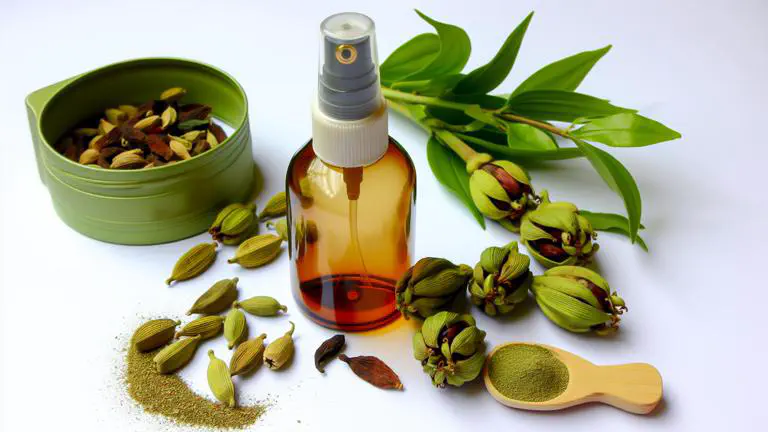
How to use cardamom as a natural repellent
Interest in natural solutions to protect the home and crops has driven the search for aromatic and botanical alternatives that reduce the use of synthetic chemicals. In this context, the question arises: can cardamom be used as a natural repellent? In this article, aimed at both consumers and farmers, we explain what the available technical documentation says, which botanical practices are actually supported by evidence, and how to incorporate cardamom responsibly into domestic and agroecological strategies.
Practical summary (for those looking for immediate actions)
- Cardamom contains volatile oils, which give it aroma and potential for aromatic use in the home; however, the documents reviewed contain no robust scientific evidence proving its efficacy as a standardised repellent against agricultural pests in the field.
- There are botanical extracts and bioinputs (neem, garlic, chilli, potassium soaps, entomopathogenic fungi) with documented trials or use in pest management for cardamom and related crops; these are recommended options for farmers seeking natural alternatives.
- For producers interested in marketing and sales and export, it is essential to address organic certifications and residue regulations; international markets value traceability and phytosanitary compliance.
What do we know about cardamom’s properties relevant to a repellent?
Cardamom is a spice with volatile oils present in its seeds and pods; the Codex Alimentarius records physico-chemical parameters that include volatile oil content for species such as cardamom, which confirms the existence of aromatic compounds that could influence the olfactory perception of insects or animals.
In addition, technical reviews on cardamom include a section dedicated to “chemical properties and uses”, indicating that literature exists on its components and applications, although the documents available do not contain efficacy studies of pure cardamom as a repellent in controlled trials published within the same documentation folder consulted. Therefore, any recommendation on the use of cardamom as a repellent should be framed as exploratory in nature and complementary to validated measures.
Evidence and botanical alternatives with technical support
The technical documents reviewed describe several botanical and biological tools with documented efficacy against pests affecting cardamom (for example, thrips). Among the options with the strongest support are:
- Entomopathogenic fungi (e.g. Lecanicillium, Beauveria, Metarhizium) that infect pests on contact and have shown control comparable to conventional insecticides in trials.
- Neem oil and commercial neem-based formulations, which have demonstrated repellent, antifeedant and ovicidal action on cardamom in studies and technology packages. In several trials, neem significantly reduced thrips damage without affecting the organoleptic quality of the product.
- Botanical mixtures and extracts such as garlic + chilli (with documented recipes for macerations) and potassium soaps, which have been used as repellents or knock-down agents in organic management. A practical example documented is macerating garlic and chilli and then diluting for foliar application as a natural repellent in agricultural contexts.
- Botanical pyrethrins and spinosad-based formulations have been used in integrated programmes; some provide rapid contact action, although their persistence is short. These alternatives tend to be compatible with organic schemes if authorised and formulated in accordance with standards.
These options are applicable as part of integrated pest management (IPM) and—when used in production destined for international markets—must comply with residue and certification requirements.
Domestic use of cardamom: recipes and precautions for the home
If what you are looking for is a homemade solution for indoor spaces (living room, kitchen, cupboards) intended to lightly repel mosquitoes or other insects, you can take advantage of cardamom’s aromatic qualities without claiming it to be a direct substitute for repellents with proven efficacy.
Safe suggestions for consumers:
Aromatic anti-odour sachets: place 8–10 opened cardamom pods in a cloth sachet together with bay leaves and a few drops of citrus essential oil. Place it in cupboards or drawers to repel (aroma-deterrence) moths or storage insects. This use is aroma-oriented; there is no documented guarantee of pest control for pure cardamom in the files consulted.
Environmental spray (domestic use, not agricultural): macerate 20–30 crushed cardamom seeds in 250 ml of alcohol or vinegar for 24–48 hours, strain and dilute 1:10 with water. Spray in rooms where you want an intense aroma. This preparation is used for its aromatic and deodorising effect; there is no data in the documents reviewed supporting its efficacy as a pesticide in crops. If there is skin or respiratory sensitivity, avoid prolonged use.
Precautions: avoid spraying uncertified preparations directly onto food or food preparation surfaces without rinsing; always carry out a test on a small area (textiles, furniture) to confirm it does not leave unwanted stains or persistent odours.
These practices are consistent with an “aroma-based control” approach in the home, but should be distinguished from field pest control, which requires trials, safety intervals and regulatory compliance.
Recommendations for farmers: can cardamom be integrated into a pest management strategy?
For farmers, the challenge is greater: any tool must demonstrate efficacy, be safe for the harvest, and meet phytosanitary requirements for marketing and sales and export.
Key points for producers:
Maintain the Integrated Pest Management (IPM) framework. The documents reviewed emphasise combining cultural practices, biological control and the use of validated botanical inputs. Extracts such as neem, garlic/chilli and entomopathogenic fungi are part of these documented alternatives.
Local verification and field trials: if you wish to test cardamom (e.g. seed infusion or extract as a repellent), do so initially on small plots and record results (percentage of damaged capsules compared with a control). No published trials were found in the documentation supporting the use of pure cardamom as a pesticide, so any adoption should be based on your own testing and evidence before scaling up.
Prioritise bioinputs with support: if the goal is to reduce thrips or other cardamom pests, the use of entomopathogenic fungi (e.g. Lecanicillium or Beauveria), neem at 2% and combinations of potassium soaps with plant extracts have evidence and experience of use in organic systems.
Regulatory compliance: any input, even one of natural origin, may require registration and approval by the phytosanitary authority (in Colombia, consult ICA requirements). The documents indicate that in Colombia some producers work with imported organic inputs and that any agrochemical must be authorised by the competent authority.
Record-keeping and traceability for export: international markets require documentation on the production chain; organic certifications and residue controls add value and open up markets such as the US and the European Union. Colombian producers interested in marketing and sales and export must prepare records that support practices and residue limits.
Documented recipes and protocols (validated botanical uses)
Below is a list of some formulations and practices referenced in the documents consulted that do have evidence of use in cardamom or in organic pest management:
Neem oil (2% formulation): applied in fortnightly sprays within cardamom technology packages, it showed a significant reduction in thrips damage without affecting organoleptic quality.
Garlic and chilli maceration: macerate 200 g of garlic and 100 g of chilli in 1 litre of water for 24 hours, strain and dilute in 10 litres of water; apply as a foliar repellent. This recipe appears in technical documents as a practice applied in agricultural contexts.
Entomopathogenic fungi: applications of Lecanicillium-based products (granular or sprayable formulations) have shown control in trials against thrips; their use is documented in recent research.
Note: none of these formulations include cardamom as a main ingredient in the trials cited; therefore it is recommended not to replace validated inputs with preparations based exclusively on cardamom without prior evidence.
Marketing, export and market considerations for producers incorporating natural measures
If the motivation for seeking natural repellents stems from the intention to access organic or premium markets, bear in mind:
Organic certifications and traceability: Obtaining recognised certifications (USDA Organic, EU Organic, JAS) increases the value of cardamom in international markets; the standards require management practices and residue limits.
Prices and demand: organic cardamom tends to sell at premium prices in markets such as the US, the European Union and Japan; however, organic certification and production costs also increase. The documents show sustained international interest in quality cardamom.
Logistics and phytosanitary regulations: export requires compliance with phytosanitary requirements and residue control; border rejections are usually due to contamination by unauthorised agrochemicals or non-compliance with documentation. It is essential to work with informed logistics agents and comply with destination market regulations.
Producing regions: the documentation on production in Colombia describes experiences in coffee-growing areas and agroforestry proposals; although national production is still incipient, the potential exists and integration into agroforestry systems has been explored.
Good practices when testing natural solutions (summary for field and home)
- Document and compare: apply a solution on controlled plots and record damage and yield compared with control plots.
- Respect safety periods and do not use homemade preparations without verifying residues if the production is for export.
- Prefer bioinputs with registration and technical endorsement where possible (neem, entomopathogenic fungi, spinosad in permitted formulation).
- At home, use cardamom for aroma and deodorising purposes; do not present it as a substitute for approved personal repellents if exposure to vectors such as mosquitoes is high.
Conclusion: should cardamom be used as a natural repellent?
The technical documentation reviewed confirms that cardamom possesses volatile oils and relevant chemical properties, but does not present conclusive trials within the files consulted supporting its isolated and standardised use as a repellent in agriculture or field pest control. On the contrary, there are botanical and biological alternatives with practical evidence (neem, garlic/chilli, entomopathogenic fungi, potassium soaps) that are indeed recommended within integrated management programmes for cardamom. For producers wishing to reduce chemicals and access organic markets, it is advisable to prioritise validated bioinputs and field trials, maintain traceability, and comply with phytosanitary regulations for export.
Call to action
If you are interested in experimenting responsibly and in a documented way with natural alternatives, start with small tests at home or on your plot following the documented recommendations and recipes, recording results: Make your own natural repellent today.
Have you ever tried a botanical mixture at home or on your plot that gave you notable results against pests? What variables would you consider before scaling up that practice across your entire production?
About the author
Juan Pablo Toro López is an Agro-industrial Engineer (Universidad La Gran Colombia) with more than 15 years of experience in the food production chain: production, food safety, process standardisation and export requirements. He has been an agro-industry lecturer at SENA and at universities such as Universidad Andina and Fundación Universitaria San Martín, and a digital marketing and sales consultant for companies in the sector.