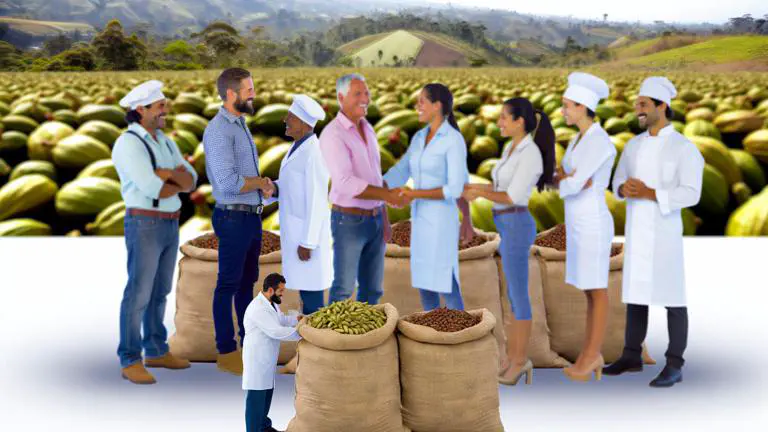
How to market cardamom in Colombia: channels and strategies
Introduction
Marketing cardamom in Colombia requires a go-to-market strategy that combines product knowledge, suitable distribution channels, regulatory compliance and a value offering aligned with national and international demand. This practical article, aimed at entrepreneurs, explains step by step how to structure cardamom marketing and sales in Colombia, from identifying channels to export requirements, pricing and recommended business models.
The guide uses references to sector studies and documents describing costs, yield and applicable certifications to facilitate informed decisions for entrepreneurs seeking to enter or scale up in this market. For example, there is evidence of productivity and yields, as well as cost guides per hectare and recommendations on certifications and associativity that are relevant for designing the commercial strategy.
1. Why is cardamom a commercial opportunity in Colombia?
- International demand for quality spices and organic cardamom that commands higher prices; markets such as the United States and the European Union value traceability and organic certifications.
- Its income potential per hectare can be attractive compared with other traditional crops in suitable areas; local studies report reference yields that enable cost-benefit analysis.
- Opportunity to add value (grading, packaging, gourmet presentations or ingredients for the food and cosmetics industry) through certifications and quality control.
2. Strategic keywords and local SEO positioning
If your goal is to rank for searches such as “how to market cardamom in Colombia”, make sure your website and materials cover these related queries used by entrepreneurs and buyers:
- cardamom Colombia
- export cardamom Colombia / cardamom export Colombia
- cardamom prices Colombia / cardamom prices and demand in Colombia
- cardamom cultivation Colombia / green cardamom Colombia
- cardamom trade Colombia / cardamom markets Colombia
- cardamom suppliers Colombia / cardamom exporting suppliers in Colombia
- cardamom sales Colombia
- how to export cardamom from Colombia; requirements for exporting cardamom Colombia; certification requirements for exporting cardamom Colombia
- cardamom marketing and sales guide in Colombia; cardamom distribution channels in Colombia
- international markets for Colombian cardamom; regulations and certifications for exporting cardamom from Colombia
- cardamom exporting suppliers in Colombia; types of cardamom and their demand in Latin America; cardamom market analysis in Colombia and Latin America
Incorporating these phrases into product pages, technical sheets and blog posts will help attract traffic from entrepreneurs and specialised buyers.
3. Marketing and sales channels: description and recommendations
When defining your channels, consider a combination of direct and indirect channels to minimise risk and maximise reach.
- Local market and retail sales
- Advantages: fast turnover, lower logistics requirements for export. Ideal for ventures starting out with small batches seeking to validate product and brand.
- Recommendations: focus on ground and whole-pod presentations, packaging that preserves aroma and controls moisture.
- Marketing and sales to national buyers (industry and distributors)
- Includes food companies, consolidating exporters and national distributors that purchase cardamom for re-export or processing. This channel requires consistent quality and supply capacity. Professional commercial management and compliance with quality standards is essential.
- Sales to intermediaries and exporting suppliers
- Working with traders and exporting suppliers can facilitate access to international markets without the producer having to take on the entire export logistics burden. It is important to negotiate clear terms (price, quantities, timelines, responsibilities for logistics and certification).
- Direct export (contracts and international sales)
- Requires greater administrative capacity (documentation, phytosanitary requirements, certificates and logistics). You will gain access to better prices, especially when the product holds certifications (organic, fair trade, Rainforest Alliance).
- Associative marketing and sales (cooperatives and groups)
- Forming or joining a collective organisation makes it easier to reach volume, reduce certification costs and access premium markets; associativity also enables stronger negotiations with international buyers.
- Digital channels and B2B trade
- B2B portals and marketplaces specialising in commodities and spices can be useful for finding international buyers; a presence on trading platforms and a clear traceability and quality policy increase buyer confidence.
4. Requirements and regulations for exporting cardamom from Colombia
For entrepreneurs seeking to export, it is critical to know and prepare documentation and certifications:
- Phytosanitary certificates and health documentation required by the importing country’s authority. Manage the permits from early stages of production.
- Quality and organic certifications (USDA Organic, EU Organic, JAS, among others) that facilitate access to premium niches and increase price. The certification process involves compliance with sustainable practices and traceability on the farm.
- Internal registration and traceability: keeping records of production, inputs and post-harvest handling makes it easier to respond to requests from buyers and certifiers.
- Logistics requirements: packaging that preserves colour and aroma (moisture control), and compliance with export regulations relating to labelling and transport. Documents such as commercial invoice, packing list and sales contract are standard.
For more specific questions such as “requirements for exporting cardamom Colombia” and “certification requirements for exporting cardamom Colombia”, it is advisable to contact competent authorities and certifying bodies to confirm the latest procedures according to the destination market.
5. Certifications and added value: how to choose
Certifications impact market access and final price:
- Organic (USDA, EU): enables access to markets with premium demand and better prices; it involves specific records and agricultural practices.
- Rainforest Alliance or sustainability seals: open niches that value conservation practices and environmental management.
- Fair Trade: attractive for markets with consumers sensitive to social justice and working conditions.
Practical advice for entrepreneurs: prioritise certifications according to your target market. For example, if you are targeting the European Union, EU Organic certification will be highly relevant; for the US, USDA Organic. Associativity can reduce certification costs if carried out collectively.
6. Pricing, demand and market analysis
- International prices vary by quality and type (conventional vs organic). Studies and market reports show ranges for organic cardamom that can offer higher margins; market data indicate that international prices have shown variability due to global supply.
- At a local level, and as a reference for analysis, establishment and maintenance costs per hectare enable break-even calculations. Cost guides report detailed line items for the first year and subsequent years; these costs should be combined with yield estimates (for example, average productivity of reference dried cardamom) to estimate profitability.
- Demand: main markets for quality cardamom include the United States, the European Union and Japan; the organic segment and products with premium certifications show growing demand.
For specific searches such as “cardamom prices and demand in Colombia” or “cardamom market analysis in Colombia and Latin America”, it is advisable to combine local sources (trade reports, chambers of commerce, export data) with commercial contacts in destination markets. A basic market study will include: market size, main buyers, price ranges by quality, and packaging and certification requirements.
7. Logistics, packaging and quality: keys to exporting
- Grading by size and colour: uniformity in colour (deep green) and size influences the product’s valuation by international buyers; uniform batches result in better prices.
- Packaging: use materials that control moisture and protect aroma (moisture barriers), and labelling that includes batch and traceability information.
- Storage and post-harvest handling: proper processing, drying and grading are determinants of final quality. If you do not control the entire chain, agree clear contractual responsibilities with suppliers or buyers.
8. Recommended business models for entrepreneurs
- Direct sales to local and national buyers: ideal for testing the market and building reputation.
- Alliances with exporting suppliers or traders: reduces export complexity in exchange for commissions or lower prices.
- Associativity and joint sales: enables meeting contract volumes and sharing certification costs.
- Forward contracts or sales with quality assurance: to minimise price and demand risk, especially when targeting international markets.
The chosen model will depend on scale, administrative capacity and target price per kilogram.
9. Numerical example for decision-making (cost and yield reference)
Using estimates from cost guides per hectare and yields reported in local studies, entrepreneurs can build a profitability simulation: first-year establishment and maintenance costs, detailed in guides, add up line items such as land preparation, inputs, seedlings, maintenance and harvest; these documents allow for building a realistic budget.
Additionally, productivity studies indicate average yields (under the study’s conditions) of 833.60 kg of dried cardamom per hectare, with variation depending on soil organic matter and management; applying this yield to the estimated costs allows for calculating break-even points and price scenarios.
Note: the figures here are references for building your own financial analysis; adapt figures according to your region, actual yield and price expectations in the chosen channel.
10. Go-to-market strategies for entrepreneurs (actionable steps)
- Define your target customer: industry (ingredients), wholesale buyer, exporter or gourmet end consumer.
- Determine your initial channel: local sales to validate the product; if you are targeting export, start managing certifications and traceability from early stages.
- Establish quality control and packaging suited to the channel (barrier packaging and traceable batch for export).
- Calculate costs and target price: use cost guides per hectare and yield projections to set a minimum viable price.
- Build alliances: group producers to reduce certification costs or partner with an exporting supplier to access international markets.
- Prepare documentation and health compliance according to the destination market before closing export contracts.
- Define a value proposition (organic, traceability, sustainability, pod size/“grade”) and communicate it clearly to buyers.
11. Risks and mitigation
- Price volatility: diversify channels and consider contracts with buyers to secure demand.
- Certification costs: consider associativity to share costs.
- Inconsistent quality: implement post-harvest and grading protocols and record traceability from the farm.
12. Resources and next steps for entrepreneurs
- Carry out a market study focused on your region and target markets (national or international).
- Build a budget per hectare and simulate price scenarios using available cost guides; this will allow you to identify the profitability threshold.
- Assess which certifications add the most value according to the destination market and plan the time and costs required to obtain them.
- If you have no export experience, consider an alliance with an exporting supplier or agent who already knows the requirements and channels.
13. Conclusion and final recommendation
Marketing cardamom in Colombia is a viable opportunity for entrepreneurs who combine quality production with a clear commercial strategy. Choosing the right channel — local sales, national distributors, exporting suppliers or direct export — depends on your scale, access to certifications and administrative capacity. Use cost guides and yield studies to build your financial plan, manage certifications when your target market requires them, and consider associativity to reduce costs and increase negotiating power.
Frequently asked questions (quick)
How to export cardamom from Colombia?
By preparing phytosanitary documentation, certifications required by the destination market, and managing packaging and logistics that guarantee quality and traceability. It is advisable to work with export agents if this is your first time.
What documents are required for cardamom export from Colombia?
Phytosanitary certificates, commercial invoices, packing list, and organic or fair trade certifications if requested by the buyer.
What are the main markets for cardamom Colombia?
The United States, the European Union and some Asian countries show demand for quality cardamom, especially organic.
Discover your best marketing and sales channel.
Which of these channels do you think best suits your current capacity, and why?
About the author
Juan Pablo Toro López is an Agro-industrial Engineer (Universidad La Gran Colombia) with more than 15 years of experience in the food production chain: production, food safety, process standardisation and export requirements. He has been an agro-industry lecturer at SENA and at universities such as Universidad Andina and Fundación Universitaria San Martín, and a digital marketing and sales consultant for companies in the sector.