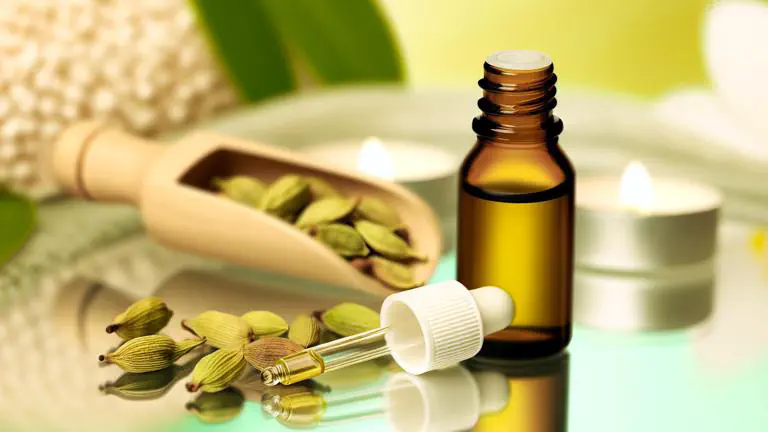
How to make cardamom essential oil at home
Cardamom is one of the most highly prized spices for its fresh, complex aroma; in artisanal aromatherapy, cardamom essential oil offers a versatile aromatic alternative for blends and cosmetic and wellness formulations. In this practical guide —aimed at wellness consumers and therapists— you will find everything from how to select raw material to a safe home distillation procedure, quality tips and market considerations for cardamom in Colombia.
Throughout the text, references on the quality, production and marketing of cardamom for essential oils in Colombia and in international markets are included, with the aim of helping you make informed decisions if you are looking to produce cardamom essential oil for personal or professional use. For production and quality aspects of the grain, technical and market characteristics described in technical documentation on cardamom in the region are considered.
1. Why choose cardamom for essential oils?
Cardamom (pods and seeds) contains volatile compounds that allow for the extraction of aromatic oils using techniques such as steam distillation. In the technical literature on cardamom, the presence of volatile oils in the plant is recorded, at percentages that can be considered representative of its potential as a raw material for essential oils.
In addition, cardamom is valued in aromatic and cosmetic formulations for its aromatic profile: fresh, spicy and slightly citrus notes that blend well in aromatherapy blends. Choosing cardamom for essential oils is a recommendable alternative for those working in artisanal aromatherapy who are seeking particular olfactory profiles.
2. Selecting raw material: quality and types
To obtain an aromatic and stable essential oil, it is key to start with quality raw material. The following are practical criteria for selecting cardamom intended for essential oils:
Origin and presentation: prefer whole, green and clean pods. Good-quality green cardamom better preserves volatile oils. Commercial classification (Extra Fancy Bold; Fancy Green; Superior; Mixed Quality; Industrial Quality) helps identify uses and valuations; Extra Fancy and Fancy Green lots in particular tend to be the most valued for aromatic uses and direct consumption.
Aroma and freshness: look for pods with an intense, fresh aroma; olfactory perception is a good indicator of volatile content.
Moisture and cleanliness: raw material must be clean and have controlled moisture (optimal moisture values are generally part of commercial specifications to prevent deterioration in storage).
Oil content: technical sources indicate that cardamom contains volatile oils that justify its use for extraction; technical reports mention approximate values for the volatile oil content of cardamom that serve as a reference when planning an extraction.
Types of cardamom: green cardamom (Elettaria cardamomum) is fundamentally the type used for essential oils. It is important to know the type in order to adjust expectations regarding aroma and yield.
If your goal is to produce essential oils for sale or professional use, consider purchasing lots with traceability and, where possible, with relevant certifications when the market requires them.
3. Where to buy and suppliers in Colombia
If you are looking for raw material in Colombia, it is advisable to find out about suppliers offering quality cardamom for essential oils. Local and regional markets have lots classified by quality; in addition, there are opportunities to establish purchases with producers or buyers serving the domestic and international market. Technical documentation on the cardamom trade in the region suggests that there are marketing and sales channels oriented towards premium markets and diversified products, including essential oils.
For specific searches such as “cardamom for essential oils Colombia suppliers” or “where to buy cardamom for essential oils in Colombia”, it is advisable to prioritise suppliers that offer:
- Lot classification information (quality, size, colour).
- Certificates of analysis if the lots are intended for aromatherapy or cosmetics.
- Traceability and storage conditions.
These considerations will help you find suitable raw material for home distillation or for use in professional formulations.
4. Legal and certification aspects if you plan to market the product
If your intention goes beyond personal use and you are looking to market cardamom essential oil, you must take into account the applicable certifications and regulations. International markets value certifications such as USDA Organic, EU Organic or JAS, and technical documentation on cardamom export and quality highlights the importance of these certifications for accessing certain markets and obtaining better prices.
In Colombia, it is also important to comply with health and labelling regulations for cosmetics and aromatic products, as well as to have documentation supporting the safety of the product if it is marketed for topical or inhalation use. For export, traceability and certifications increase the likelihood of acceptance in demanding markets.
Related topics to explore if you plan to market the product include:
- “certifications required for cardamom intended for essential oils” (documentation and recognised seals)
- “export regulations for cardamom from Colombia” (customs and health requirements)
- “how to export Colombian cardamom to the United States” (target market requirements)
Technical documents and sector handbooks note that certification and visual quality (colour and size) directly influence acceptance and price in international markets.
5. Equipment and materials needed for home distillation (steam distillation)
Steam distillation is the most common and recommended technique for extracting essential oils from plant material such as cardamom. For an artisanal-scale home project you will need:
- A still or steam distiller (commercial or homemade) suitable for essential oils.
- A controllable heat source (electric hot plate or stable burner).
- A container for the plant material (preferably a mesh or basket that allows steam to pass through without direct contact with boiling water).
- A condenser and collection system (to separate the oil phase from the water phase).
- Plant material (whole cardamom pods, clean and dry or slightly moistened depending on the method).
- Amber glass jars for storing the oil.
- Personal protective equipment: gloves, goggles and adequate ventilation.
Note: If you opt for improvised homemade equipment, make sure all connections are secure and that the system allows for efficient condensation; handling steam and high temperatures involves risks, so safety should be a priority.
6. Step-by-step procedure (steam distillation)
Below is a general procedure for carrying out home distillation of cardamom. This method is intended for artisanal and educational use; if you are looking for scaled-up production or sale, consider professional equipment and controls.
Preparing the raw material
- Select whole, clean cardamom pods. You can use the pods as they are or slightly open some to expose the seeds, which facilitates the release of volatile compounds.
- Weigh the plant material to keep track of the process; the material-to-weight ratio will influence distillation time.
Setting up the distiller
- Place the basket with the pods inside the body of the distiller, avoiding direct contact between the pods and the water.
- Add water to the equipment (without it reaching the basket) and ensure a proper seal so that the steam is conducted correctly.
Distillation
- Start heating in a controlled manner until a constant steam flow is generated; the steam will pass through the basket and carry the volatile compounds of the cardamom.
- Maintain a gentle, steady boil to avoid pressure spikes.
- The duration of the process may vary: in industrial and laboratory distillations, time is adjusted according to yield; in a home environment, distillation is usually carried out until the oil flow decreases noticeably.
Condensation and separation
- The condensed steam will be collected in the collection system; a mixture of aromatic water and essential oil will form.
- Separate the oil phase (essential oil) from the hydrosol (aromatic water) using a separating funnel or by carefully decanting while cold.
Storage
- Store the essential oil in well-sealed amber glass jars, in a cool, dark place.
- Label with date, raw material lot and process observations.
Precautions: handle steam and hot equipment with extreme caution; avoid distilling in enclosed spaces without ventilation; do not use containers that release contaminants when heated.
7. Yield and realistic expectations
Technical documentation on cardamom mentions the presence of volatile oils in the plant; for example, volatile oil contents are reported around values that can serve as a reference for estimating yield, although the actual result will depend on the quality of the raw material and the distillation equipment.
Therefore, when carrying out home distillation it is advisable to keep conservative expectations regarding the volume of oil obtained: domestic yields tend to be lower than industrial ones due to differences in efficiency, batch size and parameter control.
8. Hydrosols (aromatic water) and their use
Steam distillation also produces hydrosol (aromatic water) with cardamom notes. These hydrosols can be used in cosmetic formulations, such as aromatic mists or in topical applications depending on formulation and tolerance testing, always respecting good formulation practices.
If your goal is artisanal aromatherapy, the hydrosol can be a valuable by-product in sprays or as a base for wellness products, always with appropriate preservation controls.
9. Safety, purity and labelling
Purity: avoid mixing cardamom essential oils with solvents or contaminants. For therapeutic use, oil purity is a requirement.
Tolerance testing: before using topically, carry out patch tests and respect the dilution recommendations in carrier bases (vegetable oils) typical of aromatherapy practice.
Labelling: include information on origin, lot, distillation date and usage recommendations; if marketing the product, follow local labelling regulations.
10. How to incorporate cardamom essential oil into artisanal aromatherapy
Cardamom essential oil is valued for its olfactory profile and can be used in:
- Diffusers for ambient scenting (a few drops mixed with other oils depending on the aromatic objective).
- Blends with carrier oils for massage (within safe dilution limits).
- Natural cosmetic formulations, respecting safety and compatibility criteria.
Example blends (indicative, test tolerance and adjust according to professional judgement):
- Relaxing blend: cardamom + lavender + sandalwood (low proportions of cardamom due to its intensity).
- Stimulating blend: cardamom + lemon + rosemary.
Always document proportions and carry out tests with users or patients, especially if you are a professional therapist.
11. Commercial quality, prices and the cardamom market in Colombia
The cardamom market in Colombia and its position in international trade have been the subject of analysis in technical handbooks and studies. Classification by quality (Extra Fancy, Fancy Green, Superior, Mixed, Industrial) defines uses and prices; higher qualities tend to be destined for direct consumption and premium markets, while industrial qualities can be destined for grinding and extraction, including use in essential oils.
In the region, product diversification (such as essential oil production) is a recommended strategy for adding value to the crop, and technical handbooks mention the possibility of diversifying towards essential oils and extracts as market alternatives.
Regarding prices, the technical documentation reviewed indicates price ranges by quality in international markets; for essential oils, the final price will depend on extraction yield and lot quality. If you are looking for specific data such as “cardamom prices for essential oils in Latin America” or “cardamom prices” to plan purchases, it is advisable to review up-to-date market listings or supplier quotes, given that values fluctuate according to quality, supply and demand.
12. Production and local considerations in Colombia
Cardamom production in Colombia is still incipient compared with leading countries, but there are localised experiences and studies describing growing conditions and agroforestry systems suitable for its management; in addition, technical documentation from the sector suggests that production can be oriented towards special markets, including the supply of raw material for essential oils.
If you plan to buy cardamom for essential oils in Colombia, take into account aspects such as lot classification, traceability and drying and storage conditions —factors that affect aroma and volatile content. Sector documentation reiterates the importance of proper processing and storage for maintaining the freshness and aromatic potential of cardamom intended for demanding markets.
13. Certifications and requirements for essential oils (guidance)
For those wishing to produce cardamom essential oils for commercial purposes, organic and quality certifications are elements that facilitate access to international markets. Schemes such as USDA Organic, EU Organic and JAS are mentioned in sector literature as relevant for export and product valuation.
In addition to organic certification, other practices associated with product quality (such as residue control, classification by size and colour) are decisive for exports and sales to demanding customers.
14. Final practical tips for therapists and wellness consumers
- Start with small lots to practise distillation and fine-tune parameters.
- Record each distillation: weight of raw material, time, temperature and yield obtained.
- Prioritise fresh, good-quality raw material; well-classified green cardamom offers better aromatic results.
- If you are going to use the oil on clients or patients, document tolerance tests and comply with your country’s regulations for professional practice.
- Consider the hydrosol as a useful by-product in aromatic cosmetics.
15. Resources and next steps
If you are interested in delving deeper into commercial or certification aspects related to the production of cardamom for essential oils, there is technical material covering classification, quality pricing, and market requirements —useful information if you are considering sourcing raw material in Colombia or exporting. For integration into your aromatherapy practice, prioritise safety, traceability and input quality.
Learn to create your own essential oil.
What personal combination of essential oils do you think would best complement cardamom’s aromatic profile in your aromatherapy sessions or in your cosmetic formulations?
About the author
Juan Pablo Toro López is an Agroindustrial Engineer (Universidad La Gran Colombia) with more than 15 years of experience in the food production chain: production, safety, process standardisation and export requirements. He has been an agro-industry lecturer at SENA and at universities such as Universidad Andina and Fundación Universitaria San Martín, and a digital marketing and sales consultant for companies in the sector.