Introduction
If you are looking to learn “how to plant cardamom in Colombia step by step”, this practical guide is designed for beginner growers who want to establish and propagate cardamom plants with a technical, farm-applicable approach. Here you will find the documented procedure for working from the mother plant (rhizomes) through to transplanting, along with recommendations on soil management, irrigation, fertilisation, pest control and basic logistical aspects for production and marketing and sales. This guide draws on technical protocols for rhizome propagation and on studies regarding fertilisation and phytosanitary management documented for cardamom cultivation.
Important note for the reader: the documentation available and cited in this guide emphasises propagation from rhizomes (division of mother plants). Although other propagation methods exist in agriculture, the verified technical information presented here focuses on rhizomes; therefore, the content is developed from that technique through to transplanting.
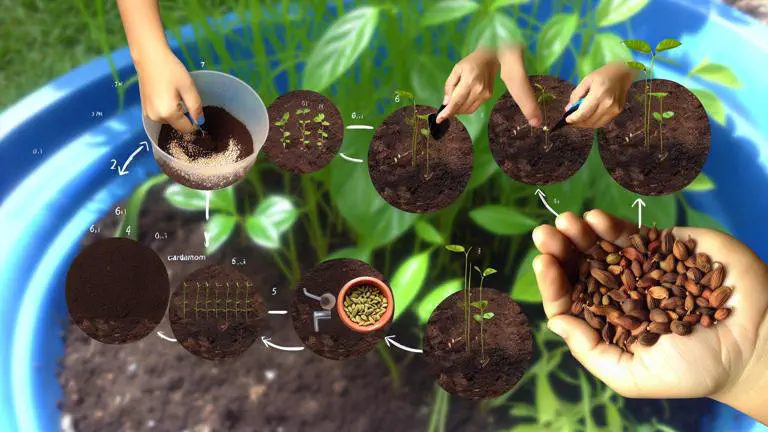
Process overview (general outline)
- Selection and establishment of a mother planting or nursery from rhizomes.
- Extraction and division of rhizomes: criteria for cuts, number of buds and piece handling.
- Disinfection and activation treatments for rhizomes (hot water baths, natural infusions, biostimulants).
- Planting in beds or pots and nursery maintenance (shade, irrigation, substrate).
- Soil management and fertilisation with an emphasis on organic fertilisers to maintain soil biota.
- Prevention and control of pests and diseases through cultural practices and, where appropriate, registered technical treatments.
- Transplanting to the field: plant quality criteria, phytosanitary condition and preparation of the planting hole and microclimate. (see following sections)
1. Selection and establishment of the mother planting (nursery)
To propagate quality material, it is advisable to establish a controlled mother planting or nursery. Technical documents describe this step as fundamental to ensuring disease-free plants with high vigour. The establishment protocol includes selecting healthy rhizomes, preparing planting beds with adequate shade and maintaining rigorous sanitary control.
Key points:
- Use material from a planting recognised for its health and yield. The mother planting must be free of symptoms of disease and pests.
- Maintain partial shade in the nursery; cardamom responds favourably to microclimates with protection from excessive direct sunlight.
- Record dates and lots for traceability, especially if production is aimed at markets requiring certification.
2. Extraction and division of rhizomes: step by step
The documented technique for dividing rhizomes includes the following practical steps and measurements, which increase the success rate in obtaining seedlings ready for transplanting:
Extraction of the mother plant:
- Loosen the soil around the plant with a spade or flat bar and extract the whole clump with roots and rhizome.
- Shake off the soil carefully to avoid damaging shoots.
Cleaning the rhizome:
- Wash with running water to remove adhering soil.
- Cut old stems, leaving 5–10 cm above the rhizome; check that there are no rotten parts.
Division of the rhizome:
- Use a sharp, disinfected tool. Each piece must contain at least 2 visible buds and at least one live root.
- The technical document suggests pieces weighing approximately between 100 and 200 grams to favour sprouting.
Sealing cuts and curing:
- Dust plant ash or powdered sulphur onto the cuts and leave to dry in the shade for 24 hours before liquid treatments.
- This process reduces fungal entry and improves healing.
Common mistakes and solutions (documented): cutting rhizomes too small, failing to disinfect tools, excess water and exposure to direct sunlight, each with its recommended solutions.
3. Treatments for disinfection and bud activation
Technical documents recommend practical treatments that can be applied before planting the rhizomes to reduce pathogens and stimulate bud emergence:
- Warm water bath: 50 °C for 10–15 minutes; cool before planting. This bath helps eliminate surface fungi and insect eggs.
- Natural garlic and cinnamon infusion: prepare a decoction (for example, 10 garlic cloves + 2 cinnamon sticks per litre, boil for 10 minutes) and soak the rhizomes for 30 minutes; effective against fungi and some bacteria.
- Biostimulants (seaweed or humates): dilute according to the product’s instructions (technical usage example: 10 ml/L) and soak for 15–30 minutes; these favour root development and bud emergence.
These treatments, combined with proper piece selection and prior curing, significantly increase the success rate in the nursery.
4. Nursery planting and care until transplanting
Planting in beds or containers:
- Plant the rhizomes in shaded beds or in pots with loose, well-drained substrate; maintain moisture but avoid waterlogging.
- Irrigation: maintain constant moisture during the sprouting stage without saturating. Irrigation techniques and soil management should prioritise good drainage to prevent rot.
Nursery care:
- Shade control: partial shade to prevent desiccation and stress from direct sunlight.
- Sanitary control: disinfection of tools, removal of debris and monitoring to detect pests and diseases early. Hygiene in the nursery is key.
Indicators for considering a plant ready for transplanting:
- Plants with vigorous shoots, developed roots and no phytosanitary symptoms.
- Once plants reach sufficient vigour in pots or beds, transplanting to the field is planned following sanitary and seasonal criteria.
5. Soil management and fertilisation
Fertilisation and soil management are determining factors for the sustainability of the crop. Studies and theses recommend prioritising soil biota and the use of organic fertilisers to maintain fertility and profitability over time. Among the documented recommendations: use of compost, bocashi and effective microorganisms to improve productivity and grain quality.
Practical points:
- Carry out soil analysis before planting and apply corrective measures according to results. Costs documented in establishment guides include soil analysis as a significant budget item.
- Incorporation of organic matter (such as bocashi) helps control certain nematodes and improves soil structure.
- Avoid indiscriminate over-application of nitrogen fertilisers; the literature notes that sustainable practices with organic fertilisation favour medium- and long-term sustainability.
6. Irrigation and microclimate management
Cardamom requires a microclimate with stable humidity and partial shade. In areas with irregular rainfall, supplementary irrigation and techniques to avoid excess moisture that favours fungi are necessary. Technical guides recommend improving the microclimate through shade and drainage management to avoid phytosanitary problems.
Practical recommendations:
- Install an irrigation system that maintains moisture without waterlogging the soil.
- Improve drainage in plots prone to water accumulation.
- Maintain living barriers or shade systems to control radiation and temperature at the plant.
7. Pest and disease management (preventive and technical)
Prevention through cultural practices is a priority: keep the plot clean, remove and burn crop residues, rotate crops at the end of the cycle and disinfect tools. These measures are documented as effective practices for reducing disease incidence.
Documented technical controls:
- Mancozeb is reported as an input used in preventive control, with technical reference dosages in some protocols.
- For nematode control or specific lesions, documents describe specific technical applications (for example, CADUSAFOS 20 g/plant in certain contexts). These applications must be used in accordance with current regulations and with technical advice.
- Oxytetracycline and other measures are mentioned in manuals for bacterial control under specific conditions; the use of any agrochemical must comply with local regulations and technical recommendations regarding doses and appropriate withdrawal periods.
Important: always apply integrated management practices, prioritising cultural and biological measures and the responsible use of chemical inputs when recommended by a technician and in accordance with phytosanitary regulations.
8. Transplanting to the field: preparation and criteria
Before transplanting, ensure that nursery plants meet the sanitary and vigour criteria mentioned above. The receiving plot must be prepared with planting holes or loose beds, good drainage and controlled shade. Disinfect tools and avoid transplanting during periods of water stress or extreme heat.
Documented suggestions:
- Transplant when plants show vigorous shoots and sufficient roots.
- Maintain management practices that favour adaptation: establishment irrigation, weed control and protection from direct sunlight.
9. Costs, profitability and supply chain
Crop establishment and maintenance costs have been documented in practical guides, with budget items such as land preparation, soil analysis, inputs and labour. It is advisable to draw up a budget per hectare and plan cash flow for the first years of establishment.
For organising the supply chain: plan manual harvesting, appropriate drying and packaging processes, and manage documentation for traceability if the destination is export. Access to international markets and premium prices usually requires certifications and compliance with phytosanitary requirements.
10. Certifications and requirements for export
International markets value certifications such as organic (USDA, EU Organic, JAS) and require documentation of cultivation practices, traceability and residue limits. Obtaining certifications can open access to premium-price niches, but entails costs and compliance with regulations. Plan ahead if your goal is export.
11. Market and opportunities for Colombian cardamom
The international market shows demand in regions such as the Middle East, Europe, the US and other destinations; considering grain quality, colour and aroma are key factors for accessing value markets. Diversification (essential oils, extracts) and certifications can improve commercial positioning. These aspects and market data have been documented in sector primers and studies.
12. Practical step-by-step summary (field checklist)
- Establish a mother planting or nursery with healthy rhizomes.
- Divide rhizomes ensuring 2+ buds and 1 live root per piece; recommended weight 100–200 g.
- Seal cuts with ash or sulphur and cure for 24 h in the shade.
- Apply treatment: warm water bath (50 °C for 10–15 min) or garlic and cinnamon infusion; biostimulant if available.
- Plant in beds or pots with loose substrate; partial shade and moderate irrigation.
- Implement fertilisation based on soil analysis and prioritise organic fertilisers (bocashi, compost).
- Maintain hygiene in the nursery and plot; remove crop residues and disinfect tools.
- Transplant when plants reach adequate vigour and the plot is prepared with good drainage and controlled shade.
Conclusion
This document presents a practical, technical guide on “how to plant cardamom in Colombia step by step” focused on propagation from rhizomes, with protocols for division, disinfection, nursery management, organic fertilisation recommendations, irrigation, phytosanitary control and preparations for transplanting. The information cited comes from technical guides, theses and manuals that describe practices applied in the region and aimed at production with health and sustainability criteria.
If your goal is to produce for international markets, plan certifications, traceability and export logistics well in advance.
Which aspect of crop establishment would you like to explore further for your farm: material selection, nursery management, or economic planning for export?
About the author
Juan Pablo Toro López is an Agro-industrial Engineer (Universidad La Gran Colombia) with more than 15 years of experience in the food production chain: production, food safety, process standardisation and export requirements. He has been an agro-industry lecturer at SENA and at universities such as Universidad Andina and Fundación Universitaria San Martín, and a digital marketing and sales consultant for companies in the sector.