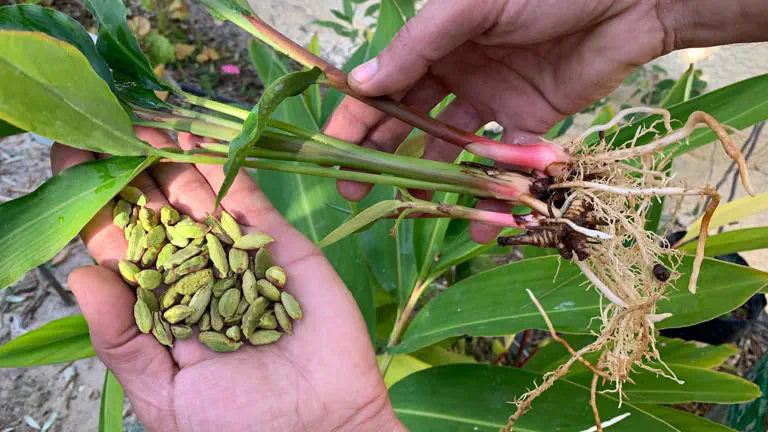
How to plant cardamom: a practical guide for beginners
The aim of this guide is to explain, step by step, how to plant cardamom for new farmers interested in starting a growing project, with special attention to the propagation stage and initial care. The information included comes from technical guides and studies on plantation establishment and management, with protocols applicable to agricultural contexts in Colombia and similar tropical areas.
Introduction: why start with cardamom
Cardamom is a high commercial value spice that can be integrated into agroforestry systems and in association with crops such as coffee or cacao. Several technical studies and guides highlight that its production cycle allows for income from the third year onwards and that its cultivation adapts to systems with live shade, which facilitates integration into coffee farms or agroforestry systems.
Before detailing the procedure, this guide covers: site selection, establishment of a mother bank, rhizome division and treatment and planting, initial care (irrigation, fertilisation and pest and disease management), and basic aspects of markets, export and applicable regulations. Practical steps and natural treatment recipes validated in the technical documentation are also included.
Planning and site selection
- Area and initial objective
- To start with your own material, it is recommended to set up a mother bank with around 500 plants in an area of 1,000 to 1,500 m²; this facilitates sanitary control and rhizome multiplication to expand the plantation within 12–24 months.
- Climatic and soil conditions
- Cardamom develops in climatic conditions similar to coffee: humid, temperate environments in tropical areas. Studies conducted in Andean regions indicate that the species tolerates shade of up to 60–63% and that the presence of organic matter positively influences productivity. Production begins from the third year onwards.
- Microclimate management
- Design live shade (associated trees such as guamo or local species) to achieve filtered shade of 40–60%; shade protects the plants and creates a favourable microclimate.
- Drainage and slopes
- The site must have soil with good drainage (never waterlogged). On gently sloping soils, drainage ditches are recommended every 15–20 m to prevent water accumulation.
Mother bank: why and how to establish it
Having a well-managed mother bank provides healthy, genetically selected and traceable material to expand the farm without depending on external nurseries. It is recommended to locate the mother bank in a protected area, with easy access and filtered shade.
Key recommendations for the mother bank:
- Area: 1,000–1,500 m².
- Shade: 40–60% (live shade preferable).
- Security: avoid passage of livestock and heavy machinery; controlled access.
- Record-keeping: number and keep records of each mother plant for traceability.
Practical advantage: with 500 well-managed rhizomes, material can be produced to populate up to 2 ha within 1–2 years, according to multiplication protocols described in technical guides.
Propagation by rhizomes: division and selection
Propagation by rhizomes is the recommended method for establishing plantations with known, healthy material. Below is the technical and practical procedure:
- Extraction and cleaning of the rhizome
- Loosen the soil around the mother plant and lift the plant with roots and rhizome.
- Gently shake off the soil and wash with clean water to remove mud and debris.
- Rhizome division
- Use a well-sharpened and disinfected knife or machete.
- Each rhizome piece must have 2 or more visible buds, at least one live root and an approximate weight between 100 and 200 g (or length 8–12 cm depending on the material). Do not cut rhizomes too small, to avoid poor sprouting.
- Sealing and curing
- It is recommended to immerse the rhizome in liquid treatments with disinfectant products or biological control products such as Trichoderma and/or Beauveria bassiana.
- Disinfection and activation treatments (documented protocols)
- Garlic and cinnamon infusion: 10 cloves of garlic + 2 cinnamon sticks per litre; boil for 10 minutes, cool and soak for 30 minutes; effective against fungi and bacteria.
- Biostimulants (seaweed/humates): dilute according to product instructions (e.g. 10 ml/L) and soak for 15–30 minutes to promote rooting.
- Practical recommendations
- Rhizomes should be planted as soon as possible after harvesting. Do not store rhizomes for long periods, and much less if they are not sealed and disinfected; viability decreases with prolonged storage.
- Keep tools clean and disinfected to avoid cross-contamination.
Initial care: irrigation, fertilisation and pest management
- Irrigation
- Maintain constant moisture without waterlogging. Water should be an ally of the crop; adequate drainage prevents rot. In mother bank systems, irrigation can be manual and controlled during the first few months.
- Fertilisation and nutrition
- Prioritise organic amendments: compost, humus, biofermenters and ash to maintain vigour without over-applying excessive nitrogen fertilisers. Balanced, continuous nutrition is preferable to high one-off doses.
- Weed management and pruning
- Keep the plot free of plant debris and waste; carry out constant pruning to remove damaged tissue and allow air circulation. Avoid indiscriminate burning and do not carry out felling that affects the shade required by the crop.
- Pests and diseases (control and prevention)
- Some diseases cited in manuals include anthracnose (Colletotrichum spp.) and rot caused by Sclerotium sp.; preventive practices include cleaning, pruning, good ventilation and timely treatments.
- Chemical control used in cited protocols: Mancozeb (formulated product) at 1.0–1.5 kg/ha with applications at intervals according to monitoring (e.g. every 7 days in preventive protocols), always following local regulations and technical data sheets.
Medium-term management: production, yield and renewal
- Start of production: the plant begins to produce seed from 2 to 3 years after planting, depending on the method (seed or rhizome).
- Renewal: it is suggested to plan renewal of the plantation between 15 and 20 years, according to technical recommendations.
- Yields: studies under local conditions show average productivity figures that can serve as a reference for planning (one study reported 833.60 kg of dried cardamom per hectare under research conditions), although actual yields depend on management, age of the plantation and soil organic matter. Important: the yield data come from research on a controlled plot and should not be taken as the sole or actual figures for all plantations in Colombia and Latin America.
Agroforestry integration and productive associations
Cardamom adapts to agroforestry systems and can be associated with species such as walnut, pacae (Inga spp.) and other regional species to diversify income and improve the microclimate. Avoiding the felling of natural forest and promoting association with shade trees is a technical recommendation from management projects and feasibility studies.
Marketing, markets and export considerations
- Markets and prices
- Technical documents on the production chain and promotional booklets indicate that international markets (Middle East, Europe, the US and others) demand quality cardamom and that prices can vary significantly depending on origin, presentation and quality. It is advisable to consult up-to-date market reports to set prices and commercial strategies.
- Requirements and regulations for exporting
- For export, it is important to comply with sanitary regulations, traceability and international standards; there are works and proposed standards (Codex, ISO) that regulate specifications for cardamom in different presentations (whole pod, seeds, ground), which facilitates trade if harmonised requirements are met. Reviewing the applicable regulations is essential before exporting.
- Suppliers and the chain
- Technical documentation suggests seeking alliances with companies and associations that support traceability, processing (drying, cleaning) and logistics for export; an appropriate value chain improves opportunities in foreign markets.
Practical checklist before planting (summary)
- Site selection: filtered shade, good drainage and access.
- Mother bank: design with 500 plants initially for sanitary control and multiplication.
- Rhizome preparation: 2+ buds, 100–200 g (or 8–12 cm), disinfection and curing for 24 hours.
- Irrigation and nutrition: constant moisture, compost and biofermenters; avoid excess N.
- Sanitation: maintain cleanliness, pruning, and apply preventive control according to monitoring (e.g. Mancozeb at technical doses if applicable).
- Production and renewal: production from 3 years onwards; renewal between 12–15 years.
Technical resources and recommended reading
- Practical guide for establishing a mother cardamom plantation from rhizomes: contains division protocols, treatments, bed design and multiplication (procedures and practical exercises).
- Studies on cultivation and zoning, soil and climatic conditions: analyses supporting installation in agroforestry landscapes.
- Documents on strengthening the production chain: biosecurity measures, disease control and management recommendations.
- Booklet and materials on marketing and sales and prices: guidance on markets and export preparation.
- International regulations and standardisation (Codex/ISO) for cardamom and spices: reference for sanitary and trade requirements.
Conclusion and next steps
Planting cardamom is a process that requires planning, sanitary control from the outset and careful management of planting material (rhizomes). For new farmers, the documented technical recommendation is to start with a controlled mother bank from rhizomes (for example, 500 plants), master rhizome multiplication and keep detailed records that allow for scale and traceability. Live shade practices, organic amendments and good drainage are pillars of success noted in the technical literature.
Start your first crop with our complete guide.
Which aspect of establishing your crop (site selection, rhizome multiplication, or marketing and sales) would you like us to go into first to support you with your project?
About the author
Juan Pablo Toro López is an Agroindustrial Engineer (Universidad La Gran Colombia) with more than 15 years of experience in the food production chain: production, food safety, process standardisation and export requirements. He has been an agroindustry lecturer at SENA and at universities such as Universidad Andina and Fundación Universitaria San Martín, and a digital marketing and sales consultant for companies in the sector.