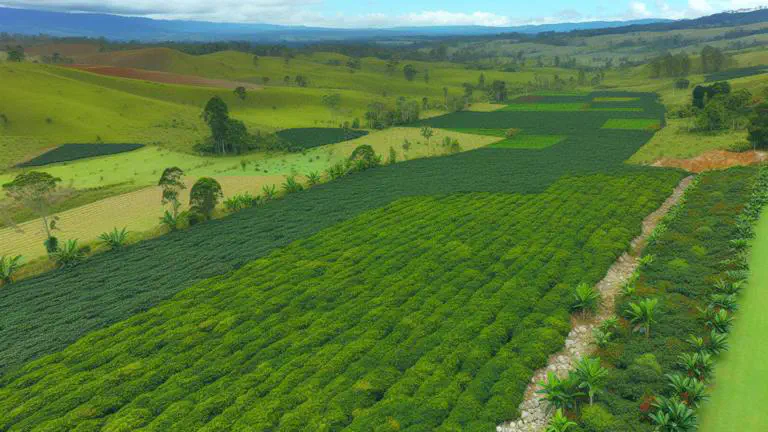
How to diversify coffee farms with cardamom
Diversification with cardamom is a viable alternative for coffee growers interested in improving the sustainability and profitability of their farms. This article explains, from a practical, agriculture-oriented perspective, how to diversify crops with cardamom on coffee farms: advantages, agroforestry system design, steps for establishing plantations, work calendar, indicative costs, sanitary control and market opportunities — all supported by technical guides and field experience gathered from specialised projects and manuals.
1. Why integrate cardamom into a coffee farm?
- Sustainability: cardamom adapts well to shade-grown systems and can be integrated into agroforestry systems, favouring the conservation of plant cover and reducing soil clearing and burning.
- Income diversification: cardamom is a spice of relatively high commercial value that allows for additional income while maintaining coffee production. Regional studies and diagnostics indicate that cardamom can complement coffee production in areas where climate and soil conditions are compatible.
- Business resilience: combining coffee and cardamom helps spread price risk and market fluctuations, providing economic stability in the medium and long term. Grower case studies show attractive returns when investment and plant material multiplication are properly planned.
2. Agroecological compatibility between coffee and cardamom
Cardamom (Elettaria cardamomum) thrives in conditions similar to those of coffee: it requires partial shade, well-drained soils and available moisture. For this reason, it is particularly well suited for integration into coffee farms through agroforestry designs that preserve plant cover and the microclimate. Practical guides recommend managing appropriate shade and drainage levels, as well as raised beds to avoid waterlogging.
Key points of compatibility:
- Shade: cardamom tolerates shade, and many technical packages indicate the need for controlled shade (for example, shade netting or natural shade at coverage percentages that favour stable microclimates).
- Drainage: it is recommended to design raised beds and drainage ditches to avoid rot during rainy periods.
- Soils: favour soils with good organic matter content and live cover to maintain fertility and reduce erosion.
3. How to diversify crops with cardamom on coffee farms — a practical roadmap
Below is a step-by-step guide, based on technical manuals and field experience, designed for coffee growers wishing to integrate cardamom into their production system. Each phase should be adapted to local context (altitude, water availability, access to labour and markets).
Phase 1: Diagnosis (Month 1–2)
- Land assessment: review soils, existing shade, drainage and altitude. Carry out soil analysis and check water availability.
- Definition of objectives: decide whether the goal is self-production for own consumption or commercial production/sale of rhizomes and fruit.
Phase 2: Selection and design (Month 3–4)
- Select genetic material: choose healthy, vigorous mother plants; mother plantations typically select between 50 and 100 elite plants as a base.
- Area design: lay out plans for beds, management aisles and shade placement; implement raised beds of 25–30 cm and aisles for management and drainage.
Phase 3: Establishment (Month 5–6)
- Soil preparation: incorporate compost and organic cover before planting; avoid compacted soils.
- Planting rhizomes or mother plants: consider pre-treatment of rhizomes (natural antifungal infusions such as garlic and cinnamon, according to practical technical sheets) and brief curing in the shade before planting.
- Shade: implement natural shade or protective netting (for example, 50–60% shade netting according to recommendations) to maintain moisture and protect seedlings.
Phase 4: Care and nutrition (Month 6–18)
- Moisture and irrigation: maintain constant moisture without waterlogging; during the dry season, apply mulch and scheduled irrigation.
- Bio-inputs and nutrition: use of compost, bioferments and Trichoderma applications at moments of rhizome reactivation.
- Sanitary management: sanitary pruning, manual weed control and clearing of plant debris to reduce pest and disease pressure.
Phase 5: Propagation and harvest (Year 2–3 onwards)
- Propagation: dividing mature rhizomes (with 2–3 active buds) allows material to be multiplied for expansion from a mother stock.
- Time to production: fruit production begins at around 3 years, so financial planning should take this waiting period into account.
Phase 6: Post-harvest and marketing and sales
- Drying and cleaning: follow post-harvest protocols to preserve colour and aroma; cleaning and grading of pods is key to market quality.
- Markets: there is international demand for quality cardamom; marketing and sales experience shows interest from countries such as Saudi Arabia, the United States, India and Canada, opening up export opportunities from Colombia. However, market access requires compliance with quality and traceability standards.
4. Technical design and practical recommendations
Below are technical recommendations drawn from practical guides and field manuals, useful when planning integration into a coffee farm. These practices prioritise sustainability and integrated management:
- Mother stock: establishing a mother stock of 500 plants is common practice for multiplication; the recommended layout includes rows with management and drainage aisles.
- Bed dimensions: beds 1 m wide and 25–30 cm high facilitate drainage and irrigation management.
- Ideal rhizome: choose rhizomes with 2 or more active buds, firm texture and a length of approximately 8–12 cm for planting.
- Pre-treatments: treatments with natural infusions (garlic + cinnamon) and Trichoderma baths before planting reduce the risk of disease in rhizomes.
- Microclimate management: control excess moisture and shade to avoid rot; keep plots clean and free of plant debris after pruning and harvest.
5. Pest and disease control (integrated approach and sustainability)
The guides consulted recommend an integrated management approach: monitoring, cultural control and the use of bio-inputs where appropriate. Some documented options include the use of plant extracts (neem, pongamia), potassium soaps and bio-insecticides such as spinosad in specific cases. These options are especially useful in systems aiming for sustainable practices with low residue in the pods.
Likewise, disinfecting the planting area with lime and ash, incorporating organic matter (for example, bokashi) and rotating plots are preventive practices cited for managing nematodes and fungi.
6. Costs and investment: a practical example and business plan considerations
To design a realistic business plan, it is essential to build your own cost breakdown. As an illustration, a practical guide presents an installation cost sheet for a mother stock of 500 rhizomes with an estimated initial cost of USD 740 (including genetic material, compost, bio-inputs and labour), showing that initial investment can be moderate if planned in stages.
Other financial considerations:
- Return horizon: cardamom offers a medium-term return; production begins at around 3 years, so financial planning and income diversification are key to sustaining the investment.
- Scalability: the mother stock facilitates multiplying one’s own material and reduces plant acquisition costs for expansion.
- Collective organisation: organising into associations or producer groups helps reduce costs (joint purchase of inputs), gain access to certifications and improve market access. Regional examples show benefits in formalisation and joint marketing and sales.
7. Market and export opportunities
International demand for quality cardamom is real and growing, and there is marketing and sales experience and interest from multiple countries. This represents an opportunity for Colombian producers who structure quality, traceability and exportable volumes. Some records report interest from markets such as Saudi Arabia, the United States, India and Canada, which can guide commercial and export strategies.
Note: phytosanitary and regulatory requirements for exporting vary by country and product; it is advisable to seek guidance from authorities and foreign trade bodies to comply with safety, packaging and export documentation regulations.
8. Good practices for long-term sustainability and profitability
To maximise the potential of cardamom as a complementary crop on coffee farms, actions are recommended that combine environmental sustainability with business management: soil management (composting and cover), field records, selection of elite plants, production of own bio-inputs, and periodic evaluation of costs and income. Successful projects combine these practices with ongoing training and commercial partnerships.
Some practical keys:
- Records: keeping field records by plant or by plot facilitates selection and traceability.
- Reinvestment in improvements: reinvesting part of sales revenue in bio-inputs and infrastructure improvements accelerates sustainability.
- Training and association: technical training and collective organisation are determining factors for accessing better prices and marketing and sales channels.
9. Example of a simplified calendar for integration into a coffee farm
| Month | Main activity |
|---|---|
| 1–2 | Land diagnosis, soil analysis. |
| 3–4 | Selection of mother material, bed and drainage design. |
| 5–6 | Soil preparation, rhizome treatment and planting. |
| 6–18 | Initial care: irrigation, bio-fertilisation, sanitary control. |
| 24–36 | Propagation, expansion and preparation for first harvests. |
This calendar is intended as a guide; adjust it according to altitude, local climate and available resources.
10. Final recommendations for the coffee grower deciding to diversify with cardamom
- Plan for the long term: cardamom requires patience (production from year 3) and financial planning.
- Start with a mother stock: this is an efficient strategy to ensure healthy material and reduce multiplication costs.
- Prioritise sustainable practices: composting, live cover, controlled shade and integrated pest management increase the resilience of the system.
- Record and measure: keep records of production, costs and practice trials to make decisions based on results.
- Seek technical assistance and partnerships: association and access to technical advice improve the chances of commercial success.
Conclusion
Integrating cardamom into a coffee farm is an alternative that combines sustainability with the potential to improve profitability, provided it is done with planning, sound technical practices and commercial vision. The manuals and practical cases consulted show that, with a well-established mother stock, microclimate management, integrated sanitary control and a market strategy, coffee growers can diversify their income and contribute to more resilient agroforestry systems.
Learn how to integrate cardamom into your coffee farm.
Which aspects of your farm do you find most favourable for starting a pilot cardamom project, and what questions would you like answered before you begin?
About the author
Juan Pablo Toro López is an Agro-industrial Engineer (Universidad La Gran Colombia) with more than 15 years of experience in the food production chain: production, safety, process standardisation and export requirements. He has taught agro-industry at SENA and at universities such as Universidad Andina and Fundación Universitaria San Martín, and has worked as a digital marketing and sales advisor for companies in the sector.