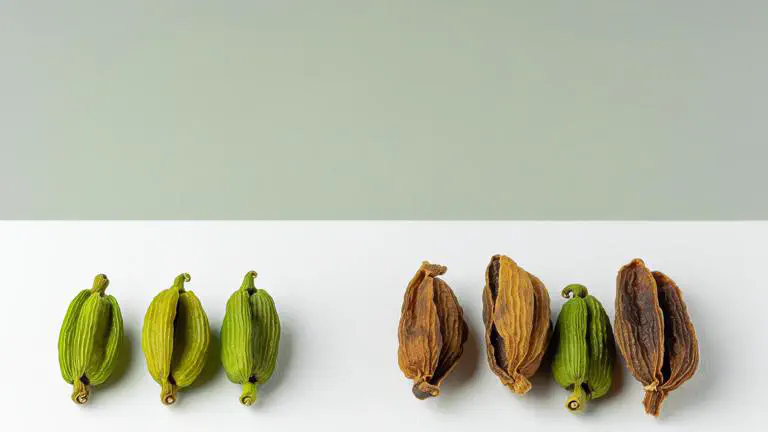
Green vs dried cardamom: a comparative guide for chefs and buyers
Cardamom is one of the most highly valued spices in cuisine and international trade. For chefs and professional buyers, understanding the differences between green cardamom and dried cardamom is key, not only in terms of sensory characteristics, but also in quality criteria, commercial classification and purchasing and export opportunities from Colombia. This article offers a practical, comparative guide geared towards purchasing decisions, culinary use and marketing and sales, with emphasis on the parameters that matter to the market and industry.
Index
- Introduction: why it matters to distinguish between green and dried cardamom
- Physical and sensory differences: colour, texture, aroma and flavour
- Post-harvest process and its impact on quality: harvest, drying and yield
- Classification and commercial grades of cardamom
- Technical criteria for chefs and buyers (selection by use)
- Prices, markets and export opportunities from Colombia
- Practical guide: how to distinguish green and dried cardamom in Colombia and assess lots
- Recommendations for storage, packaging and traceability
- FAQ and quick checklist for purchasing and export
- CTA and closing
Introduction: why it matters to distinguish between green and dried cardamom
For chefs, the choice between green cardamom and dried cardamom directly influences the aromatic profile of a dish; for buyers and exporters it affects logistics, price and quality requirements. The key phrase differences between green and dried cardamom sums up aspects ranging from appearance and flavour to the commercial classification that determines its destination in local and international markets. Understanding these differences makes it possible to optimise costs and culinary or commercial outcomes.
Physical and sensory differences: colour, texture, aroma and flavour
Colour and appearance: high-quality green cardamom has an intense, uniform green colour; the drying process changes the pod’s tone and texture, turning it a duller colour with a drier, rougher surface. Visual assessment of colour and uniformity is a common quality criterion in cardamom trade, and lots with an intense green colour tend to receive better ratings in premium markets.
Texture and moisture: green cardamom (or “cherry”, depending on the post-harvest stage) retains more moisture and requires controlled drying to reach moisture levels that are safe for storage. For dried cardamom, a target moisture content is recommended to prevent spoilage and preserve aroma, with values of around 10–12% considered suitable in the technical specifications used to classify commercial grades.
Aroma and flavour: drying affects the concentration and perception of essential oils. In general, green cardamom retains a fresher, more volatile profile when processed and packaged quickly; dried cardamom offers greater aromatic stability and an extended shelf life, albeit with possible changes in sensory nuances. These differences are leveraged by chefs depending on the culinary technique: brief infusion (where freshness is appreciated), or grinding for dry blends (where the stability of the dried product is preferred).
Post-harvest process and its impact on quality: harvest, drying and yield
Post-harvest handling largely determines the quality of the final product. In Colombia, it is recommended to harvest the fruit when it begins to change from green to yellow, carrying out several periodic harvests to optimise ripeness and quality; drying of the capsule should preferably be carried out on the same day as harvest in order to preserve aroma and avoid defects that affect price and use.
A relevant figure for buyers and exporters: the yield from green fruit to dried product usually ranges between 26% and 30% (that is, the dry weight represents around that percentage relative to the fresh green fruit), a figure used in marketing and sales and logistics calculations. In addition, studies carried out under local conditions report average productivity per hectare that allow supply estimates for markets to be made, which is useful when negotiating volumes, delivery times and prices.
Classification and commercial grades of cardamom
In both international and domestic trade, categories are used that take into account pod size, colour, uniformity and physical condition. These grades determine prices and uses: from direct consumption and premium export to industrial grinding. Among the most commonly used categories are Extra Fancy Bold, Fancy Green, Superior, Mixed Quality and Industrial Quality, with size criteria (pod diameter) and appearance defined by buyers and trade standards.
Some practical classification criteria:
Size: Extra Fancy Bold pods usually exceed 7 mm in diameter; Fancy Green falls between 6 and 7 mm; Superior between 5 and 6 mm; the lower categories group together small or damaged pods.
Colour: a preference for intense green is a price factor in premium markets. Lots with blemishes, oxidation or colour variations tend to be valued lower.
Moisture content: a technical target for dried cardamom is to maintain moisture within a range that ensures stability (for example, around 10–12% according to the technical specifications applied in classification).
Purity and cleanliness: the absence of foreign matter, loose seeds or open capsules is an essential requirement for commercial grades intended for export and direct consumption.
International standards and recommendations (Codex / ISO) aim to harmonise technical specifications in order to facilitate trade and reduce barriers, an aspect that is relevant for buyers working across multiple markets.
Technical criteria for chefs and buyers (selection by use)
Use in infusions and preparations where freshness is paramount: favour cardamom that retains green tones and an intense aroma; where possible, use recently processed pods or lots classified as Fancy Green or Extra Fancy Bold in order to preserve aromatic nuances.
Use in spice blends and grinding: buyers who require aromatic stability in dry blends tend to prefer dried cardamom that is well classified (Superior or Mixed Quality, depending on the end use), ensuring uniformity and shelf life in the ground product.
Export and premium markets: for shipments to demanding markets, select lots with suitable colour, size and moisture content, and request certifications or analytical testing in line with the importer’s requirements and applicable international standards.
Bulk purchases vs selected lots: industrial buyers may accept greater heterogeneity when the end use is extraction or processing; chefs and gourmet brands will look for homogeneous lots with traceability.
Prices, markets and export opportunities from Colombia
International market and statistics: global cardamom trade is concentrated among a few historical exporters, but there is room for diversification and for Colombian producers to join value chains, provided that quality and regulatory criteria for export are met.
Prices by grade: higher grades (Extra Fancy Bold, Fancy Green) command higher price ranges; there are reference prices per kilogram by grade that help guide negotiations and price-setting, although these values can vary by market and season.
Cardamom export opportunities in Latin America from Colombia: growing demand in Latin American markets and the search for alternative suppliers create opportunities for Colombian products differentiated by quality, freshness and traceability. Buyers must assess the logistics chain and classification (green vs dried cardamom) in order to align supply and demand in each destination country. Standardisation studies and projects (Codex / ISO) aim to facilitate this trade by establishing common technical criteria that favour exports.
Cardamom price in Colombia and production costs: to assess offers and margins, it is important to consider establishment and maintenance costs per hectare and production scenarios, since these parameters influence price negotiation and medium-term purchase planning.
Practical guide: how to distinguish green and dried cardamom in Colombia and assess lots
Below is a quick guide with steps and criteria applicable upon receipt of lots (for buyers) or in the kitchen (for chefs):
- Initial visual inspection
- Observe colour: intense, uniform green, or dull/yellowish tones? Colour is a quick indicator of freshness and post-harvest handling.
- Check size and uniformity: a lot that is homogeneous in size facilitates use and classification; larger pods command better prices in premium markets.
- Moisture and texture test
- Touch: a pod that is dry to the touch and has a rigid texture corresponds to dried cardamom; if the pod gives way or shows mucilage, this is a sign of insufficient drying or over-ripeness at harvest. Timely drying on the same day as harvest helps avoid defects that affect aroma and price.
- If instruments are available: measure moisture content to confirm it falls within safe storage ranges (e.g. around 10–12% when classified for trade).
- Aroma and sensory test
- Open a few pods: note the intensity of the aroma and the presence of any off-aromas. A fresh, strong aroma generally corresponds to good raw material and proper post-harvest handling.
- Cleanliness and purity assessment
- Check for the absence of soil, stones and unwanted plant matter; cleanliness is a key requirement for export and direct-consumption grades.
- Review of documentation and traceability
- Request specifications, certificates (where applicable) and laboratory tests required by the destination market; harmonisation of standards facilitates negotiation in international markets.
Recommendations for storage, packaging and traceability
Storage: keep dried cardamom in cool, dry environments away from strong odours; packaging should provide adequate barrier protection to preserve aroma and prevent moisture absorption.
Packaging: for export, packaging that protects against oxygen and moisture is recommended, with clear labelling and lot/date information to facilitate traceability; buyers should agree packaging requirements with the supplier.
Traceability and quality: requesting harvest, process and classification records helps ensure consistency across deliveries and facilitates certification when required by the market.
FAQ and quick checklist for purchasing and export
Checklist for receiving lots (practical summary):
- Colour: intense green (for premium lots) or as per the agreed specification.
- Size and uniformity: according to the requested grade (Extra Fancy, Fancy, Superior, etc.).
- Moisture: check with an instrument or agree on testing (target values ~10–12% for dried cardamom).
- Cleanliness: free of physical impurities and contaminants.
- Documentation: lot record, drying process details and any certification requested by the market.
Conclusion: choosing between green and dried cardamom according to purpose
The choice between green cardamom and dried cardamom depends on the end use and market requirements. For chefs seeking freshness and specific aromatic nuances, lots with an intense green colour and careful post-harvest handling are preferable. For buyers and exporters, properly classified dried cardamom (in terms of size, moisture and cleanliness) offers greater stability, logistical ease and compliance with international trade standards. In Colombia, factors such as harvest and drying management (drying on the same day as picking is recommended to preserve quality) and the green-to-dried conversion rate (approximately 26–30%) are practical parameters that influence the product’s commercial value.
In addition, grade classification and the prices associated with each grade allow buyers and chefs to align expectations and budgets; Latin American markets present growing opportunities for Colombian cardamom, provided quality criteria and import requirements are met in each destination.
Resources and internal references (selected)
Harvest and drying recommendations found in production and post-harvest management documents in Colombia, which emphasise the importance of harvesting at the point of colour change and drying the fruit on the same day as harvest in order to achieve better quality and price.
Yield data and the green fruit-to-dried cardamom ratio (26–30%) and average productivity per hectare that facilitate purchasing planning and commercial logistics.
Commercial classification and quality parameters (size, colour, moisture) used to define commercial grades and market prices.
Information on international harmonisation standards and efforts that impact exports and technical specifications for cardamom (Codex / ISO, and international trade statistics).
Choose the ideal type of cardamom for your recipe or business.
If you are looking for guidance on selecting lots according to culinary use, classifying grades for bulk purchasing, or preparing documentation for export, we can help you define specifications and evaluation criteria tailored to your needs.
Do you prefer to distribute dried cardamom for industrial grinding, or are you looking for premium green pods for a gourmet line: what is your priority, and which markets are you interested in positioning yourself in?
About the author
Juan Pablo Toro López is an Agro-industrial Engineer (Universidad La Gran Colombia) with more than 15 years of experience in the food production chain: production, food safety, process standardisation and export requirements. He has taught agro-industry at SENA and at universities such as Universidad Andina and Fundación Universitaria San Martín, and has worked as a digital marketing and sales consultant for companies in the sector.