Introduction
Cardamom crop care comprises a set of agronomic practices aimed at ensuring the health, longevity and productivity of the plantation. This guide is aimed at producers seeking to optimise the agronomic management of cardamom in Colombia, integrating practical recommendations on propagation, irrigation, fertilisation, pest control, and marketing and sales and cost aspects. The guidance is based on technical guides and studies applied to the crop in tropical regions, as well as work specifically developed for Colombian and Latin American contexts.
1. What is meant by “cardamom crop care”
When we speak of cardamom crop care, we are referring to all operations from the selection of planting material and establishment of the mother stock bed through to maintenance, harvest and post-harvest management tasks. This includes:
- Selection and multiplication of healthy rhizomes.
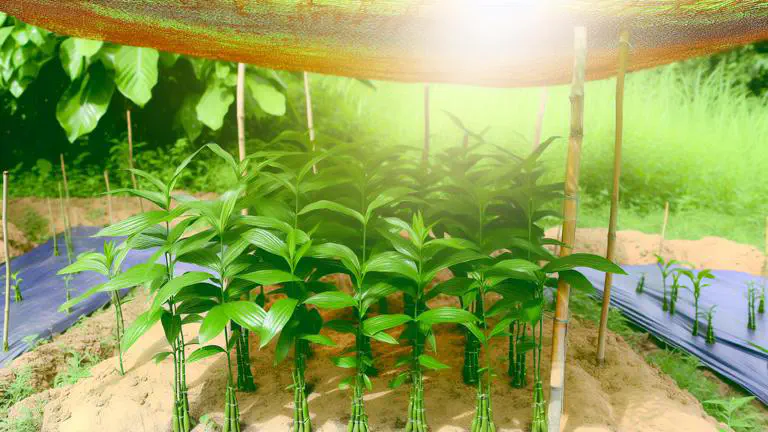
- Soil preparation and shade management in agroforestry systems.
- Fertilisation programmes with an emphasis on organic matter.
- Irrigation and drainage strategies to prevent rotting.
- Integrated management of pests and diseases.
- Cost control and preparation for marketing and sales and export.
2. Agroecological zones and conditions (brief)
Cardamom develops favourably in tropical climates with shade and well-drained soils; in Colombia, genotype characterisation studies and adaptation research have been carried out showing the viability of its cultivation under systems with controlled cover and shade. To decide on a planting site, it is recommended to carry out soil analysis and plan the installation of the crop taking into account drainage, availability of organic matter and access to water for controlled irrigation.
3. Propagation: mother stock bed and rhizome management
Multiplication by rhizome is a fundamental practice. Technical documents describe protocols for establishing a mother stock bed from rhizomes, with recommendations on size, treatment and planting beds: rhizomes of 8–12 cm with at least 2 active buds, prior curing, disinfection and antifungal dips (for example, natural infusions or treatments with beneficial microorganisms) before planting in prepared beds. The recommended bed dimensions are: width ~1 m, height 25–30 cm, spacing between beds 0.5–1 m to facilitate management and drainage.
Common propagation errors include cutting rhizomes that are too small, failing to disinfect tools or cure the cuts, and storing rhizomes for extended periods before planting; these errors reduce sprouting and increase disease incidence. Practical protocols propose record-keeping and a workflow from selection through to planting to maximise the success rate of multiplication.
4. Plantation design and shade management
Cardamom responds well to agroforestry systems and cultivation under shade. Guides recommend using shade species whose roots do not compete with cardamom and that provide services (timber, fruit, firewood, organic fertiliser). For new plantations, if shade trees are planted, position them initially at 5–6 m and then thin them to distances of 10–12 m as the agroforestry system develops; spatial planning should avoid root competition and excessive shade that increases humidity and disease risk.
The use of living cover crops and nitrogen-fixing plants (e.g. forage peanut, Desmodium sp.) can improve soil fertility and protect the crop, provided root interactions are controlled so as not to compete with cardamom. In addition, it is recommended to maintain mulch around the base of the plants to conserve moisture and organic matter.
5. Irrigating cardamom: how and when (practical guide)
Cardamom irrigation management should seek to maintain soil moisture without causing waterlogging. Technical documents warn that excess water favours rhizome rot, so the strategy should include:
- Ensuring good drainage in beds and furrows to prevent water accumulation.
- Carrying out moderate, uniform irrigation, prioritising constant moisture without saturation.
- Monitoring crop behaviour after heavy rainfall and implementing drains or containment trenches if necessary.
Although not all documents provide an exact irrigation schedule (frequency and volumes), the general recommendation is to adapt irrigation to soil texture, phenological stage and the presence of shade; soils with higher organic matter content retain moisture and allow for less frequent irrigation, whereas sandy soils require more frequent, controlled irrigation. To design an effective irrigation programme, it is advisable to rely on soil analysis and local field trials. These guidelines reflect the observations contained in the technical guides reviewed.
6. Cardamom fertilisation: recommended techniques and practices
Cardamom nutrition, as emphasised in the guides consulted, relies on the use of organic matter and natural fertilisers as the basis of the fertilisation programme. Some key points drawn from the technical protocols are:
- Cardamom requires elements such as nitrogen (N), potassium (K) and calcium (Ca), but nutrition should be based on organic matter and not solely on chemical fertilisers.
- Recommended organic fertilisers and practical doses (technical references): mature compost (~3 kg per plant every 3 months), worm castings (~1 kg every 2 months), plant ash (~200 g every 3 months) and agricultural lime (~100 g every 6 months). These recommendations appear in practical organic fertilisation guides for cardamom.
- Bio-ferments and leachates (for example, dilutions of 1 L in 10 L of water) can be applied monthly as biological soil activators; booster foliar applications (sprays every 20–25 days with mixtures based on bio-ferments, molasses and apple cider vinegar) are proposed as a complement.
It is essential to carry out soil analysis before designing a fertilisation plan and to adjust doses according to results, avoiding overdosing, especially of nitrogen, which can increase vulnerability to disease. These recommendations are consistent with the agronomic improvement practices described in the technical guides reviewed.
7. Weed management and soil cover
Weed control is a recurring activity in crop management. Among the practices indicated, the following are recommended:
- Manual or mechanical weed control as the first option to avoid soil contamination by herbicides.
- Use of living cover crops or service plants that do not compete with cardamom and that provide nitrogen fixation and organic matter (e.g. forage peanut, Desmodium sp.).
- Maintaining mulch and crop residue around the base to conserve moisture and protect soil microbiota; removing residue and stubble when sanitary problems exist to avoid disease inoculum.
8. Management of cardamom pests and diseases in Colombia
The management of cardamom pests and diseases in Colombia should be understood from an integrated management approach. Technical guides and documents on strengthening the production chain describe documented preventive and curative measures, among which the following stand out:
- Ongoing monitoring of the plot to detect the presence of insects or foliar symptoms.
- Preventive cultural practices: sanitary pruning, sale of crop residue, plot cleaning and avoiding the accumulation of infected material. These practices reduce pathogen and pest pressure.
- Biological control and registered products: protocols cite alternatives such as Beauveria bassiana for certain insects and other biological control measures; when chemical products are used, the guides recommend following indicated doses and frequencies and favouring integrated control to minimise impacts.
- For fungal diseases (e.g. blights and scabs), fungicides and sanitary practices are recorded in regional protocols; management includes pruning, controlled burning of crop residue and, where applicable, applications of formulated products under technical supervision.
It is advisable to implement an integrated pest and disease management plan that combines cultural practices, biological control and, where necessary, the responsible use of chemical inputs approved under applicable regulations and under the supervision of a technical professional. The technical documentation consulted presents examples of tactics and dosages that must be adapted to local scale and regulations.
9. Cardamom varieties and selection of material
In Colombia, genetic characterisation and selection work has been carried out on materials adapted to the territory; the selection of varieties or genotypes should be based on locally adapted material, productivity and pod quality. National studies and characterisations have been published and serve as a reference for local multiplication and improvement programmes. To choose recommended varieties for cardamom cultivation in Colombia, it is important to consult genetic characterisation studies and local multiplication programmes before importing non-adapted material.
10. Cardamom production costs in Colombia
Establishment and maintenance costs per hectare are documented in guides and case studies. A technical example details expenses associated with land preparation, soil analysis, inputs, labour for planting and maintenance, as well as inputs for harvesting and processing. These tables make it possible to estimate initial investment (years 1–3) and maintenance costs in subsequent years, and are useful for economic planning of the project. Producers should prepare their own cost breakdown adapted to local scale and conditions in order to estimate crop profitability.
11. Marketing and sales of cardamom and export from Colombia
Marketing and sales of cardamom require consistent quality, compliance with phytosanitary requirements and, in many cases, quality or production certifications (organic, fair trade, etc.). International markets demand high-quality cardamom; global trade reports and sector projects show key destinations and import values that can guide commercial strategies. Obtaining certifications and documenting processes (manual harvesting, post-harvest management, traceability) facilitates access to export markets. For regulations on exporting cardamom from Colombia, it is advisable to consult the competent authorities and comply with food safety and traceability requirements; in addition, identifying cardamom suppliers and buyers in Colombia and interested markets is part of the commercial strategy.
12. Post-harvest and quality: aspects to consider
Handling during harvest and immediate processing are determining factors for product quality. Pods must be harvested at the optimal time and dried or processed following protocols that prevent fungal growth and loss of aroma. Attention to packaging and storage (good hygiene practices and moisture control) is key to preserving the quality demanded by domestic and international buyers. The sector guides and technical primers described in the crop literature offer practical guidelines for these stages.
13. Best practices and final recommendations for producers
- Prioritise the selection of healthy material and the establishment of a well-managed mother stock bed to ensure vigorous plants.
- Favour fertilisation based on organic matter (compost, worm castings) and supplement with bio-ferments according to soil analysis. Avoid nitrogen excess.
- Design the shade and agroforestry structure with multiple services in mind (shade, timber, fruit), avoiding root competition with cardamom.
- Maintain an irrigation programme that avoids saturation; good drainage is essential to prevent rotting.
- Apply integrated pest and disease management: monitoring, sanitary pruning, biological control and responsible use of inputs when necessary.
- Record costs and yields to make informed decisions on marketing and sales, and explore quality certifications that open higher-value markets.
14. Resources and next steps (for the producer)
- Carry out soil analysis before planting and every 1–2 years to adjust fertilisation.
- Build a mother stock bed with disinfection and rhizome curing protocols to ensure healthy material.
- Develop an integrated pest and disease management plan based on monitoring and local technical recommendations.
- Prepare a per-hectare budget considering establishment and maintenance to assess economic viability.
- Research potential markets, cardamom buyers in Colombia and export requirements to plan the marketing and sales strategy.
Find out how to improve the performance of your crop.
Which aspect of the agronomic management of your plantation would you like to optimise first: material multiplication, organic fertilisation, pest control, or marketing and sales planning?
About the author
Juan Pablo Toro López is an Agro-industrial Engineer (Universidad La Gran Colombia) with more than 15 years of experience in the food production chain: production, food safety, process standardisation and export requirements. He has taught agro-industry at SENA and at universities such as Universidad Andina and Fundación Universitaria San Martín, and has worked as a digital marketing and sales consultant for companies in the sector.