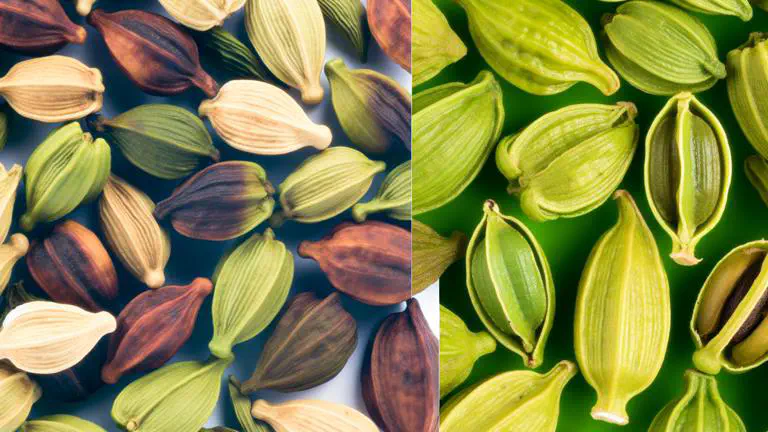
Colombian vs Guatemalan cardamom: which is better?
Introduction
For professional buyers and chefs, the choice between Colombian cardamom and Guatemalan cardamom is not simply a matter of origin: it involves evaluating technical attributes —aroma, flavour, colour, size— as well as commercial factors such as traceability, availability, certifications and cost. This article offers a technical and practical comparison aimed at facilitating purchasing and culinary decisions, integrating available technical and commercial evidence on both origins.
Throughout the text we will explicitly use the keyword difference between Colombian and Guatemalan cardamom to analyse the sensory and commercial criteria that matter to buyers and chefs.
Executive summary (for quick decisions)
- Guatemala is historically the world’s largest cardamom exporter; its production has underpinned global supply for decades.
- Colombia is an emerging producer whose development is oriented towards quality lots, sale of green cardamom (cherry) with purchasing and collection processes that seek to reduce the time between harvest and drying, and with initiatives to guarantee traceability.
- Sensory quality (aroma, flavour) and appearance (green colour, size) are key criteria for demanding markets; these attributes are strongly influenced by post-harvest handling and product grading.
Market context: origin and market share
Guatemala is described in technical sources as the leading global exporter, playing a determining role in international cardamom trade and with a long production tradition based on family farming. This explains why a large part of the international market associates high-availability cardamom with Guatemalan origin.
Colombia has strengthened its production in coffee-growing regions and other suitable areas, consolidating collection chains and quality controls to serve niche markets and exports. Local purchasing programmes define reception requirements (for example, collection and delivery of cardamom in cherry form with short collection times) in order to preserve sensory quality.
This background defines the commercial framework within which buyers and chefs assess the difference between Colombian and Guatemalan cardamom.
Technical sensory attributes: aroma, flavour, colour and size
Aroma and flavour: where do the differences lie?
The perception of cardamom’s aroma and flavour depends on the composition of essential oils contained in the seeds and the pod, as well as on post-harvest handling (selection, drying and storage). Technical sources indicate that aroma is a central quality criterion and that drying and grading influence aromatic intensity and the preservation of the sensory profile.
- Difference between Colombian and Guatemalan cardamom in aroma and flavour: the available documentation suggests that sensory differences tend to be associated with post-harvest handling —for example, speed of processing and drying— and with uniformity in colour and size, factors that affect the end consumer’s aromatic perception. In Colombia, purchasing and collection processes are promoted that seek to reduce the time between harvest and drying in order to maintain a fresher aroma.
Practical implication for chefs and buyers: when evaluating lots, sensory aspects (aroma and flavour) should be verified through smell and taste tests with representative samples under controlled conditions; provenance can be indicative, but post-harvest handling is decisive.
Colour and size: visual criteria for demanding markets
International markets value bright green colour and uniform pod sizes; international grading systems describe pod categories by diameter and visual appearance. These attributes impact both perceived quality and potential price in markets such as the United States, the European Union and Japan.
- When comparing origins, cardamom that reaches the market with better colour and homogeneous size tends to receive higher valuation, regardless of country of origin.
Production, handling and traceability (comparative view)
Cardamom production in Colombia
Available evidence on production in Colombia documents practices associated with shade-grown systems and the possibility of establishing the crop as an alternative in coffee-growing regions; furthermore, local studies indicate that production begins from the third year after planting and it is recommended to renew the plantation between 12 and 15 years. These elements are part of the production structure in Colombia.
Technical documents and purchasing programmes emphasise the need for collection centres, the delivery of cardamom in cherry (green) form with short times between harvest and reception, and the implementation of on-farm quality controls to guarantee lot traceability. These requirements seek to ensure that sensory and visual quality is maintained from the farm to the buyer.
In addition, there are cost analyses and economic scenarios for one hectare of production in Colombia that provide criteria for setting sale prices and assessing profitability, which is relevant for buyers and supply chain actors.
Production and systems in Guatemala
Guatemala is reported as the leading global exporter and has long production experience linked mainly to family farming; its structural role in the global market has generated consolidated harvesting, processing and export systems, with significant volumes in international trade.
Traceability of Colombian cardamom
Traceability is an increasingly valued requirement among international buyers. In Colombia, purchasing schemes that include farm visits, contractual quality commitments and delivery scheduling make it possible to document the traceability of Colombian cardamom from the plot to the collection centre, which facilitates export and acceptance in demanding markets.
Pests, phytosanitary management and practical differences
Comparative studies on pest management show relevant differences in available options and control strategies between countries. In Colombia, the crop is still incipient and pest management is in many cases oriented towards products and practices compatible with organic and niche markets; there are also limitations in the registration of specific formulations for cardamom, which means producers tend to use biological or organic controls and cultural practices. By contrast, in other countries synthetic formulations are used with more consolidated registrations and experience.
For buyers and chefs concerned about residues and compliance with standards (for example, maximum residue limit requirements), it is essential to request information on phytosanitary management and residue analysis per lot, in addition to relevant certifications.
Quality and certifications: access to international markets
International markets demand not only sensory and visual attributes, but also certifications that support practices (organic, fair trade, etc.) and technical documentation. Technical sources recommend holding certifications recognised by target markets (USDA Organic, EU Organic and equivalents) when aiming to access higher-value niches. In addition, buyers in the United States, the European Union and Japan value colour, size and uniformity in the product.
- Quality certifications for exported Colombian cardamom: the documentation refers to the advantage of holding organic and fair trade certifications to maximise access and price in highly demanding markets. Likewise, compliance with phytosanitary and traceability requirements is essential.
Prices and demand: factors that determine value
The factors that determine the price and demand of Colombian cardamom in Latin America and other markets are multiple: visual quality (colour and size), aroma and flavour (post-harvest preservation), certifications and volumes available for delivery in line with contracts. Published cost studies on production in Colombia allow for estimating costs per kilogram produced and serve as a reference for negotiating purchase price.
- Price and demand of Colombian cardamom in Latin America: demand depends on the product’s positioning (conventional vs organic), certification and consistency in delivering lots of homogeneous quality. Buyers in the region value traceability and compliance with standards.
Practical guide: how to evaluate and buy cardamom (for buyers and chefs)
Below is a practical and actionable guide that integrates technical and commercial criteria.
- Request representative samples and conduct a smell and taste test: confirm aroma and flavour under controlled conditions.
- Check appearance: bright green colour and size uniformity —these are indicators of the good visual quality desired by demanding markets.
- Request traceability documentation: harvest dates, collection centre, times between harvest and drying (in local programmes, delivery of cardamom in cherry form within less than 10 hours of harvest is required for certain schemes).
- Certifications: request a copy of organic or fair trade certifications if required by the destination market.
- Analytics: require residue analysis and microbiological quality assessment when the market requires it.
- Commercial conditions: define quantity, packaging, and transport and storage conditions that preserve the product’s sensory integrity.
This guide summarises the key steps for buyers and chefs who will be assessing the difference between Colombian and Guatemalan cardamom based on technical and commercial criteria.
Logistical aspects and requirements for exporting from Colombia
Requirements for exporting cardamom from Colombia: entities and marketing and sales programmes in Colombia promote the structuring of collection centres, compliance with origin and traceability documentation, and the implementation of quality processes to meet phytosanitary and certification requirements requested by international markets. Local purchasing schemes include farm visits and contractual commitments to ensure compliance.
Guide to exporting cardamom from Colombia to Latin America: a practical process includes (i) certification and phytosanitary compliance, (ii) establishing traceability from plot to shipment, (iii) grading and packaging in accordance with importing country requirements, and (iv) transport logistics suited to preserving fresh or dehydrated product.
Steps for selling Colombian cardamom in foreign markets: establish supply contracts, document traceability, obtain certifications where applicable (organic, fair trade) and present samples and technical data sheets demonstrating sensory quality and residue analysis when required.
Competitive advantages of Colombian cardamom in international markets
- Traceability and quality control: purchasing programmes in Colombia that include on-farm verification and collection centres provide buyers with confidence about the product’s origin and handling.
- Focus on niche and organic markets: many Colombian producers target markets with demand for organic and traceable products, which can translate into competitive advantages if certification is achieved and standards are maintained.
- Speed in post-harvest handling: schemes that reduce the time between harvest and collection/processing seek to preserve aroma, colour and sensory quality, attributes valued by demanding chefs and buyers.
These competitive advantages can position Colombian cardamom in higher-value niches, especially when good quality management is combined with certifications and compliance with destination market requirements.
Origin and differences between Colombian and Guatemalan cardamom: technical conclusions
Origin and differences between Colombian and Guatemalan cardamom: while Guatemala maintains leadership in volume and export tradition, the difference between Colombian and Guatemalan cardamom in technical terms tends to lie more in post-harvest handling, traceability and certifications than in any radical botanical distinction reported in the documentation reviewed. For buyers and chefs, origin is relevant, but the evidence points to sensory quality and commercial reliability depending on the process and controls applied.
Specific technical aspects documented: shade-grown production, production beginning from the third year and long-term plantation renewal in Colombia; the need for short delivery times to preserve quality; the importance of proper grading and drying to maintain aroma.
Practical recommendations for chefs and buyers
- Prioritise sensory evaluation and request samples from both origins before deciding on continuous supply.
- Demand a technical data sheet with traceability and harvest dates, especially when purchasing green (cherry) cardamom or fresh lots.
- For highly demanding markets, prefer lots with available quality certifications and residue analysis.
- Assess not only the unit price but the total cost of logistics, quality control and supplier consistency: in Colombia there are cost studies that allow prices to be negotiated based on realistic production scenarios.
Brief technical FAQ
Is there a botanical difference between Colombian and Guatemalan cardamom?
- The documentation consulted does not suggest substantial botanical differences; the distinctions relevant to purchasing decisions centre on handling, drying, grading and traceability.
What quick indicator can I use to assess quality in a sample?
- Bright green colour, fresh aroma and uniform size are useful visual and sensory indicators for an initial assessment.
Conclusion
The technical comparison between Colombian and Guatemalan cardamom shows that there is no universal answer as to which is “better”: Guatemala dominates in volume and export experience, while Colombia stands out for its traceability schemes, focus on higher-value markets and efforts to reduce post-harvest times that favour the preservation of aroma and colour. For buyers and chefs, the decision should be based on sensory evaluation, traceability verification, compliance with destination market requirements and cost-benefit analysis of the supplier.
Would you like to learn more about how to evaluate samples and technical documentation before a major purchase? Discover why Colombian cardamom is growing in demand.
About the author
Juan Pablo Toro López is an Agroindustrial Engineer (Universidad La Gran Colombia) with over 15 years of experience in the food production chain: production, food safety, process standardisation and export requirements. He has taught agroindustry at SENA and at universities such as Universidad Andina and Fundación Universitaria San Martín, and has worked as a digital marketing and sales consultant for companies in the sector.