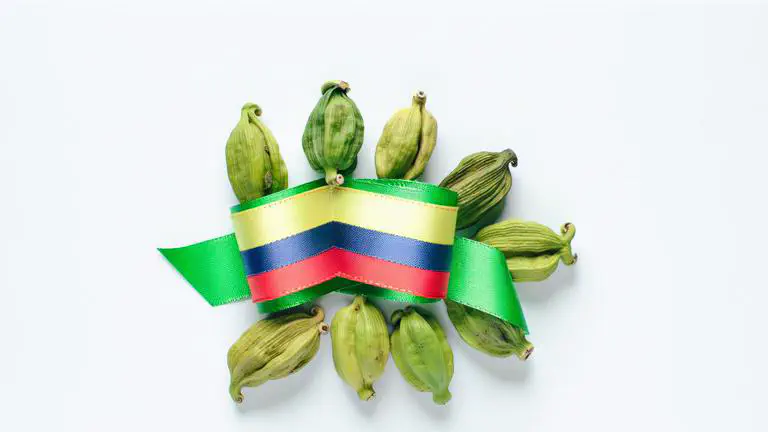
Colombian cardamom: flavour, quality and global opportunity
Colombian cardamom is emerging as an alternative of interest for exporters and gourmet buyers seeking a product with traceability, visual quality and sustainable production options. In this article we analyse why Colombian cardamom is special, the characteristics valued by markets, production costs and profitability, export requirements and, finally, how to connect with suppliers for direct purchase from the producer.
Why Colombian cardamom is special
Several technical documents and practical guides from the sector show that the value of cardamom is built on the farm: from the selection of mother plants, production records, post-harvest management and the capacity to meet quality requirements for export. The practical guide for establishing a mother plantation highlights the importance of genetic selection, plant health and records as factors that raise the quality of the final product, elements applicable to Colombian cardamom seeking premium markets. In addition, characterisation studies carried out in Colombia support the existence of local materials that have been selected and studied for agricultural production and multiplication.
The competitive advantage of Colombian cardamom can be summarised in three pillars:
- Genetic selection and mother plantation with technical records that allow traceability and quality. Management of the mother bank and its records is central to guaranteeing high-quality plant material.
- Post-harvest management and quality criteria that make it possible to offer green pods, size and aroma in line with international demand; this is key to accessing demanding markets.
- Potential to implement sustainable practices and the use of bio-inputs, which responds to market trends towards organic products or those with a lower environmental footprint.
These strengths mean that cardamom produced in Colombia can be positioned both in gourmet segments and in trade flows towards markets that value traceability and visual quality of the product.
Quality, classification and requirements valued by gourmet buyers
Demanding buyers, especially in Europe, the United States and Japan, value sensory and visual characteristics that facilitate acceptance and pricing: bright green colour, intense aroma, uniform pod size and absence of defects. Market guides and technical data sheets underline that colour, size and uniformity are criteria that directly affect the possibility of accessing premium markets and setting prices.
In terms of certifications and added value, the mother plantation guide refers to several certification options (organic, Rainforest Alliance, Fair Trade and local certifications) which, if met, allow access to higher-price segments and established demand.
Markets and demand: where can Colombian cardamom go?
International trade data gathered in studies on cardamom show that there are established markets for the spice, with major importers in the Middle East, Europe, the United States and Asia. Trade analyses present countries such as Saudi Arabia, the United Arab Emirates, India and several European countries as relevant importers in recent years, which represents opportunities for new suppliers that guarantee quality and traceability.
The list of buyers and companies working with cardamom in end markets (milling companies, packing companies and large distributors) helps to define target markets for Colombian cardamom in Europe and Asia; there are also importers and distributors in the United States interested in organic and higher-quality cardamom, which opens up the possibility of exporting from Colombia to these destinations if phytosanitary and quality requirements are met.
Production and costs: a practical look at cardamom cultivation in Colombia
The technical materials reviewed include guides for establishing mother banks and cost tables for production per hectare. Establishment, supply and maintenance costs per hectare are broken down in project documents and cost guides; some relevant inputs and items include: acquisition of mother plants, land preparation, shade, organic fertilisers and bio-inputs, tools, labour for maintenance and harvest, as well as packaging for post-harvest. These items appear detailed in the cost guides reviewed for Colombia and allow the initial investment and expected cash flows to be estimated during establishment and early production stages.
The practical guide for mother banks also emphasises that profitability is consolidated in the medium term (2–3 years) and that the mother plantation should be understood as a productive investment that provides rhizomes and quality material for multiplication and sale.
Important: monetary values and production rates vary depending on the region, management and local prices; internal documents present tables with figures in local currency and income and expenditure flow scenarios that serve as a technical reference for planning productive projects in Colombia.
Sustainable cultivation practices for cardamom in Colombia
The technical literature included among the sources underlines that organic fertilisation, the use of efficient microorganisms and conservation of soil biota are strategies that improve the sustainability of the crop and the quality of the grain. Studies and theses on fertilisation with organic fertilisers indicate that these approaches favour soil fertility in the medium and long term and can improve product quality, aspects relevant for producers aspiring to organic certifications or markets with demand for sustainable practices.
The mother plantation guide also recommends ongoing training, learning networks and associativity as mechanisms to drive good practices and facilitate access to certifications and markets, a recommendation applicable to those seeking to consolidate a supply of Colombian cardamom with a sustainable seal.
Requirements and logistics for exporting cardamom from Colombia
Documents on marketing and sales and promotion of cardamom point to the need to comply with the regulations and standards of destination markets. Recurring aspects include: phytosanitary documentation, traceability, compliance with the food safety standards of the importing country and, where applicable, organic or sustainability certifications. In practical terms, technical booklets and guides recommend structuring the offer from the farm with records and controls that facilitate responsible export and compliance with international standards.
Regarding the logistics of exporting cardamom from Colombia, marketing and sales projects show that there are players offering comprehensive management (marketing and sales, logistics and procedures), and that it is critical to plan the chain from harvest to shipment in order to maintain quality (drying, classification, barrier packaging and humidity control).
To export cardamom from Colombia to the United States or other markets, it is necessary to identify the specific requirements of the importer, which may include certifications (FDA, organic, JAS, EU Organic, etc.), and to work in advance on the traceability and documentation of batches; acceptance in mature markets depends both on physical quality and on the certification and traceability of the product.
Cardamom price: context and variables (including 2025)
Cardamom prices depend on quality, certification, size and the destination market. Market studies and price analyses for organic and high-quality cardamom report ranges that vary widely depending on origin and quality; for example, for higher grades, international prices may sit in ranges that reflect a premium for visual quality and certification, although these vary depending on the market and the year.
Regarding the price of Colombian green cardamom in 2025, the available documents contain market analyses and trade patterns that help to understand price dynamics, but recommend obtaining direct quotes and verification with buyers or market agents to obtain the current price for specific quality and certification in 2025.
How to grow cardamom in Colombia: key elements for producers
If your objective is to produce Colombian cardamom with exportable quality, practical guides and booklets recommend the following minimum steps:
- Select material of known origin and establish a mother bank with technical records (division date, treatments, health status) to preserve the genetics and health of the plant material.
- Adopt good soil management and fertilisation practices; the use of organic fertilisers and microorganisms can improve soil health and medium-term profitability.
- Implement post-harvest management with rapid drying, classification by colour and size, and suitable packaging to maintain quality through to the final market.
- Keep production and health records from the first year to facilitate certification and traceability processes, a frequent requirement for export.
These elements summarise the technical practices available in the guides reviewed and are applicable to those wishing to produce cardamom for sale or export from Colombia.
Best cardamom-producing regions in Colombia and production scale-up
The documents consulted include references to varietal selection experiences and multiplication projects in regions of Colombia (for example, selection and multiplication work in Jericó, Antioquia, the Coffee Region, Quindío), which indicates that there are areas with experience in cultivation and local improvement programmes that should be considered when identifying producing regions with potential.
Production scale-up requires planning mother plantations, providing adequate shade, managing plant rotation and health, and considering associativity to consolidate exportable volumes; associativity is proposed as a mechanism for accessing markets and managing joint logistics towards export.
Export logistics: practical points
To ensure quality through to the final destination, export logistics for cardamom from Colombia must take into account:
- Post-harvest management: drying, classification by size and colour, humidity control and moisture-barrier packaging to prevent deterioration during transport.
- Documentation: phytosanitary certificates and traceability documents requested by the importer; early planning of regulatory compliance reduces friction in exporting.
- Commercial and logistics management: coordination of cargo consolidation, road transport to port or airport and selection of a carrier experienced in high-value agricultural products; local projects mention the provision of comprehensive services that facilitate this process for small and medium-sized producers.
Commercial opportunities and risks to consider
Opportunities:
- Access to markets with demand for quality cardamom if traceability and compliance with standards (organic or sustainability) are guaranteed.
- Possibility of offering Colombian green cardamom with added value through classification, packaging and certifications that increase the price per kilogram in select markets.
Risks and considerations:
- International marketing and sales require compliance with phytosanitary and certification requirements; a lack of records or controls can limit access to certain markets.
- Price fluctuations and production costs require financial planning. Cost guides provide scenarios for evaluating investment per hectare and expected profitability under different levels of management.
Practical recommendations for exporters and gourmet buyers
For exporters and gourmet buyers interested in Colombian cardamom, we recommend:
- Prioritise suppliers with documented mother plantations and technical records that support traceability and quality of the plant material.
- Request samples classified by size and colour for sensory evaluation and quality analysis before closing purchase contracts; appearance and aroma are decisive for premium markets.
- Assess the possibility of requiring certifications (organic, Rainforest Alliance or equivalent) if your target market values them, and plan the transition towards sustainable practices in advance.
- Plan logistics and documentation with agents experienced in spice exports, so that the supply chain maintains quality from the farm to the final buyer.
Frequently asked questions (brief answers based on the documentation)
How can I contact Colombian cardamom suppliers for export?
- Look for mother banks, associations and trade managers who can certify production records and offer logistics and marketing and sales services; the background of local projects details this type of player.
What sustainable cultivation practices are recommended?
- Use organic fertilisers, bio-inputs and soil management aimed at conserving biota and fertility, according to research and theses on organic fertilisation applicable to cardamom.
Is it viable to export to the United States from Colombia?
- Yes, provided that the phytosanitary and quality requirements demanded by importers in the US are met; moreover, some buyers value organic certifications and the visual quality of the product.
Conclusion
Colombian cardamom brings together technical and commercial conditions that make it attractive to gourmet buyers and international markets: genetic selection, the possibility of implementing sustainable practices, certification options and marketing and sales channels that can be put in place when the producer has traceability and quality control. Production planning, investment in sustainable practices and the formalisation of traceability are key steps to consolidating an exportable supply.
Discover how to acquire Colombian cardamom direct from the producer.
Which element do you consider most decisive when choosing a Colombian cardamom supplier: certification (organic), traceability and technical records, price, or export logistics capacity?
About the author
Juan Pablo Toro López is an Agro-industrial Engineer (Universidad La Gran Colombia) with more than 15 years of experience in the food production chain: production, food safety, process standardisation and export requirements. He has been an agro-industry lecturer at SENA and at universities such as Universidad Andina and Fundación Universitaria San Martín, and a digital marketing and sales advisor for companies in the sector.