Environmental impact of cardamom cultivation and how to produce responsibly
Cardamom cultivation in Colombia presents a significant opportunity to diversify rural income and access international markets. However, like any agricultural activity, its environmental impact varies according to the production management adopted. This article analyses the environmental impact of cardamom cultivation, with particular attention to Colombia, and proposes sustainable and verifiable practices that NGOs and responsible producers can apply to reduce the ecological footprint and improve traceability and access to higher-value markets.
The following recommendations and observations are based on studies, technical guides and experiences gathered in technical documents on cardamom cultivation and the value chain, including recommendations on organic fertilisation, integrated pest control, agroforestry systems and environmental certifications.
1. What do we mean by the environmental impact of cardamom cultivation?
The term environmental impact of cardamom cultivation encompasses the direct and indirect effects that production generates on natural resources (soil, water, biodiversity), emissions and waste, as well as on the health of communities and long-term economic sustainability. The technical literature consulted identifies that the impact is highly dependent on the production system: shade-grown systems with organic management tend to conserve biodiversity and soil structure, whereas conventional practices with intensive use of agrochemicals can reduce soil biota and generate risks from residues.
The strategic focus of this article is sustainability: how to mitigate negative impacts through responsible production practices aligned with market requirements and export regulations. This involves considering everything from plantation establishment to post-harvest management and traceability.
2. Frequent environmental impacts and technical evidence
Soil and water conservation: When cardamom is integrated into shade-grown agroforestry systems with vegetative cover, it helps reduce erosion and improve water infiltration; this is documented in cultivation guides that promote the design of integrated systems and the conservation of ground cover.
Biodiversity and soil microfauna: Prolonged use of chemical fertilisers and pesticides negatively affects soil biological activity. Studies on organic fertilisation show that the use of organic fertilisers and effective microorganisms improves soil biodiversity and fertility over the medium and long term.
Residues and safety limits: To access international markets, it is critical to comply with pesticide residue limits; international standards and proposals (Codex, ISO) regulate parameters and sampling methods for spices, requiring rigorous control of inputs used in the field.
Pest control and effect on pollinators and biological allies: Conventional control strategies using broad-spectrum insecticides can eliminate predators and pollinators; biological alternatives and bioinsecticides (for example, spinosad, neem extracts and the conservation of natural enemies) have shown effectiveness in cardamom and lower environmental impact when integrated into management programmes.
3. How to reduce the environmental impact of cardamom cultivation in Colombia: proven sustainable practices
Below are sustainable practices for cardamom cultivation in Colombia, contrasted with the evidence available in the technical documentation reviewed.
Agroforestry design and shade management
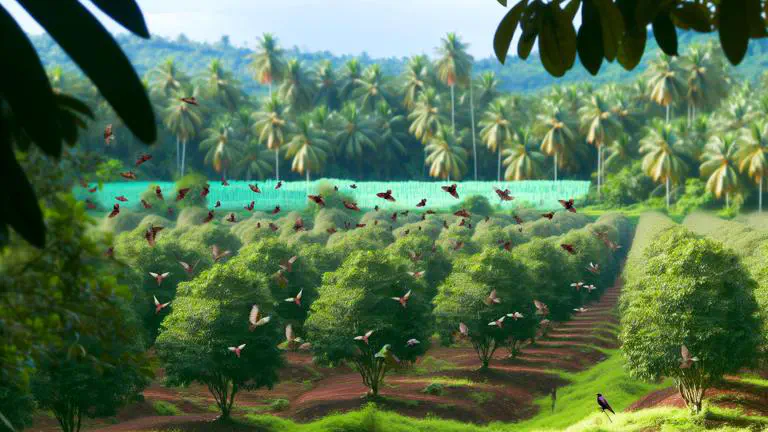
- Integrating cardamom into shade-grown agroforestry systems helps conserve biodiversity and reduce erosion. Studies and guides recommend structures with living cover and native trees that provide shade and maintain the soil ecosystem’s dynamics.
Use of compost and biofertilisers
- The application of organic fertilisers such as bocashi, vermicompost and bio-ferments increases soil organic matter, improves cation exchange capacity and can increase yields while reducing dependence on chemical fertilisers. Documented trials show improvements in productivity and grain quality with the adoption of these organic inputs.
Integrated pest management (IPM) and organic cardamom pest control
- Prioritising preventive measures: sanitary pruning, manual control where viable, and conservation of natural enemies (lacewings, predatory mites, predatory bugs) form the basis of IPM. When chemical interventions are required, selecting products with lower persistence and rotating them reduces resistance and residues; where possible, preference should be given to bioinsecticides authorised in organic programmes, such as spinosad formulations, and plant extracts (neem) that leave few residues.
Waste management in cardamom plantations in Colombia
- Implementing composting systems for plant residues and post-harvest by-products reduces waste generation and produces organic inputs for the production cycle. The technical documentation recommends composting and the use of effective microorganisms to generate liquid fertilisers and bocashi.
Conservation of quality and traceability for responsible export
- Traceability and compliance with hygiene standards and residue limits are critical to mitigating impacts associated with export. International Codex and ISO standards establish relevant parameters for spices; producing with traceable and documented practices facilitates market access and reduces regulatory risks.
Collective organisation and management
- Organising producers into networks or cooperatives facilitates the adoption of sustainable practices, access to certifications and the joint purchase of bio-inputs, reducing costs and improving technical and commercial capacities. Guides on strengthening value chains show the economic and social benefits of collective organisation.
4. Sustainability certifications and applicable regulations
Environmental and fair-trade certifications are tools for ensuring responsible practices and opening higher-value markets. The documentation reviewed mentions common certifications and their benefits:
Organic (USDA, EU): requiring the absence of prohibited agrochemicals for prior periods and traceability systems; usually involves conditions on fertilisation practices and pest control.
Rainforest Alliance: promotes the conservation of living shade, biodiversity conservation and environmental management on farms.
Fair Trade: focused on fair labour conditions, collective organisation and social benefits.
Residue standards and limits: The Codex Alimentarius and ISO specifications relating to cardamom provide technical frameworks for labelling, residue limits and food hygiene practices; these are mandatory references for exporters seeking to meet international requirements.
In Colombia, producers must also meet local requirements and certifications and phytosanitary registrations that facilitate marketing and sales and certification of origin; starting registrations from the early years of production facilitates subsequent certification processes.
5. Practical management and evidence-based operational recommendations
Below is a summary of practical and verifiable actions that NGOs and responsible producers can implement to reduce the environmental impact of cardamom cultivation in Colombia and improve positioning in sustainable markets.
Establishment plan and mother plantation: documenting the plantation from the outset (planting records, use of certified genetic material and management of the mother stock) improves traceability and facilitates certifications. Practical guides emphasise the value of a well-managed mother stock as a strategic resource.
Fertility and use of organic fertilisers: promoting local production of bocashi, vermicompost and bio-ferments; studies show increases in organic matter and improvements in soil cation exchange capacity with these inputs. This reduces dependence on synthetic fertilisers and improves medium-term sustainability.
Integrated pest management programme: designing a plan that prioritises cultural and biological measures; reserving the use of chemicals for justified situations, with lower-persistence molecules, and documenting applications to comply with residue limits. Research on thrips control in cardamom demonstrates that bioinsecticides such as spinosad and options based on plant extracts are valid alternatives in integrated programmes.
Post-harvest and waste management: optimising drying and processing to reduce losses; recycling plant residues through composting and the production of bio-inputs; documenting processes to improve export traceability. Production guides highlight the importance of drying and cleaning for cardamom quality.
Institutional strengthening and collective organisation: promoting the organisation of producers to share certification costs, jointly purchase organic inputs and access technical training. Experiences in production chains show that collective organisation improves market access and the ability to certify products.
6. Environmental impact of Colombian cardamom exports and considerations for international markets
Cardamom exports involve additional responsibilities in terms of traceability, residue limits and health documentation. Compliance with international standards (Codex, ISO) and obtaining environmental certifications facilitate entry into demanding markets and reduce environmental risks associated with practices that leave residues or affect product quality. In addition, access to organic and certified markets can generate economic incentives to maintain sustainable practices.
It is important to record and monitor input applications to demonstrate compliance with maximum residue limits and with the regulations of the importing country; examples in the technical literature show residue analyses to assess the degradation of certain molecules when applied ahead of harvest.
7. Relevant cases and practical evidence
Soil and yield improvement with organic fertilisers: theses and field studies show increases in fertility and yield indicators when bocashi-type fertilisers and effective microorganisms are applied, in some cases doubling organic matter parameters and improving grain quality attributes. This evidence supports the transition towards organic fertilisation to reduce long-term impacts.
Thrips control and integrated management: comparative trials indicate that bioinsecticides (spinosad) and plant extracts can offer control levels comparable to conventional insecticides, with lower residue persistence, when appropriately integrated into management. These alternatives are useful for producers seeking organic certifications or aiming to reduce residue risks.
Benefits of collective organisation: experiences documented in production chains and technical guides show that collective organisation reduces costs, facilitates certifications and provides access to international markets. Collective organisation also favours the adoption of good environmental practices on a regional scale.
8. Recommendations for NGOs and technicians supporting producers
Prioritise training in integrated pest management and organic fertilisation, supporting the implementation of bocashi, vermicompost and bio-ferments on pilot farms.
Promote agroforestry models and vegetative cover management plans that reduce erosion and improve resilience to climate change.
Encourage early documentation: field records from the first year facilitate subsequent certification and traceability.
Support the evaluation and adoption of effective bio-inputs (e.g. spinosad in authorised programmes) and the conservation of natural enemies to minimise the use of agrochemicals.
Facilitate collective organisation processes to share certification costs and the purchase of bio-inputs, and to coordinate supply towards international markets.
Conclusion
The environmental impact of cardamom cultivation depends largely on the management decisions made by producers and actors in the chain. The available technical evidence supports that adopting agroforestry systems, progressively substituting chemical fertilisers with organic fertilisers (bocashi, vermicompost, bio-ferments), implementing integrated pest management with biological tools, and collective organisation to access certifications are effective measures for producing cardamom responsibly, reducing the environmental footprint and improving access to higher-value markets.
Apply environmentally friendly practices.
What concrete action would your organisation or farm implement over the next 12 months to reduce the environmental impact of cardamom cultivation and improve its traceability towards sustainable markets?
About the author
Juan Pablo Toro López is an Agro-Industrial Engineer (Universidad La Gran Colombia) with more than 15 years of experience in the food production chain: production, food safety, process standardisation and export requirements. He has been an agro-industry lecturer at SENA and at universities such as Universidad Andina and Fundación Universitaria San Martín, and a digital marketing and sales advisor for companies in the sector.