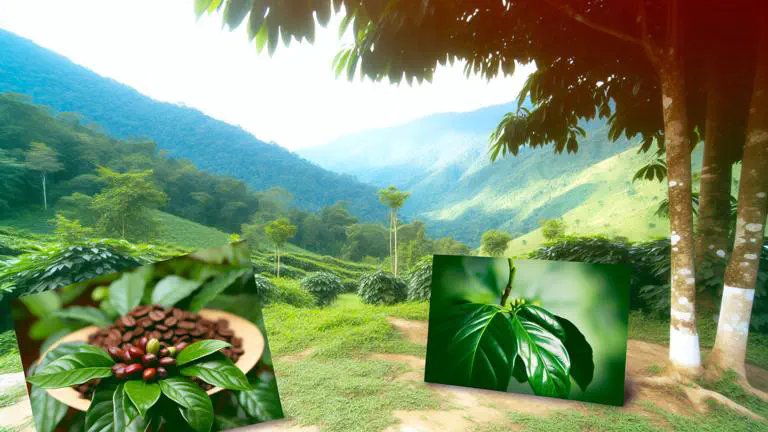
Cardamom and coffee: how to combine both crops for greater profitability
Coffee agroforestry offers a window of opportunity for coffee growers seeking to diversify income and increase the resilience of their farms. In this context, the integration of cardamom as a crop associated with coffee emerges as an interesting alternative: cardamom can develop under climatic and shade conditions compatible with the coffee plant, which facilitates its establishment in polycultures aimed at generating additional income and improving the sustainability of the production system.
In this article, aimed at coffee growers, we will address everything from the technical foundations available in studies and guides to commercial, logistical and market aspects, with the goal of providing you with a practical guide oriented to Colombian territory on “cardamom and coffee: benefits of polyculture.”
1. Why integrate cardamom into a coffee agroforestry system?
Environmental compatibility: research and technical guides indicate that cardamom develops under climatic conditions similar to those of coffee and tolerates the presence of shade trees (the technical literature documents tolerance to shading, which makes cardamom an option for association in coffee plantations).
Income diversification: cardamom is a highly valued spice in international trade and, in many contexts, reaches prices higher than coffee; therefore, its inclusion can generate additional income on coffee farms, reducing vulnerability to bean price volatility.
Complementary production timelines: commercial cardamom production can begin from year 3 onwards, allowing cash flow planning and complementing the production stages of coffee on the farm.
Potential for sustainable practices: the literature on cardamom in the region shows successful experiences with organic fertilisation and sustainable management that improve both yield and quality, aligning with agroecology strategies in coffee growing.
2. Agronomic aspects supported by available documentation
Important note: below are presented only the technical and production aspects that are supported in the guides and studies available in the documents cited. For any of these points, consult local specialists before adjusting your management plan.
Shade and association: cardamom tolerates shade and its cultivation under trees or in shaded coffee plantations is a viable alternative; therefore, designing an agroforestry system where trees, coffee plants and cardamom coexist is feasible from an ecological standpoint, according to research on species association in coffee-growing areas.
Start of production and cycle: studies consulted indicate that cardamom seed production can begin from the third year, with plantation renewal periods suggested between 12 and 15 years, so investment and replacement planning must take these timeframes into account.
Yield improvement with organic fertilisation: experimental studies show production increases in cardamom with the application of organic fertilisers (e.g. bocashi) and efficient microorganisms (EM). In some trials, bocashi treatments at specific doses together with EM increased yields from initial records to 3-4 t/ha in the best treatments, and also improved grain quality (density, size, colour).
Propagation and establishment: practical guides for establishing mother plantations and rhizome production describe methodologies for generating propagation material (rhizomes) and present options for forming certified mother banks to supply local nurseries; several cases document experiences of engagement with coffee growers to generate rhizomes and diversify production in the Colombian region.
3. Polyculture design: guidance for the coffee grower
Below are general criteria, derived from the literature, for designing an integration of cardamom and coffee within an agroforestry system. Remember that the specific details (row design, spacing, densities, phytosanitary management) must be defined based on local diagnosis and technical assistance.
Site assessment: verify that soil and climatic conditions are compatible with both species; documentary references maintain that cardamom and coffee share general climatic conditions, which facilitates their association in many Colombian coffee-growing areas.
Structured shade: take advantage of existing tree infrastructure in the coffee plantation to integrate cardamom, maintaining shade levels that allow the coexistence of both species (the technical documentation supports cardamom’s tolerance to shading).
Genetic material bank: establishing a mother plantation or rhizome bank allows multiplication and supply of quality seedlings; practical guides show that this approach is viable and that rhizome production can generate returns if properly organised with nurseries and local networks.
Organic management based on local resources: the use of organic fertilisers and community composting has shown improvements in yield and quality. In rural contexts, using local materials to produce bocashi and biofertilisers has enabled better production results and greater sustainability.
4. Post-harvest and quality: critical steps for accessing markets
Cardamom quality for domestic and international markets largely depends on post-harvest management. Technical guides describe key processes that the producer or association must guarantee to maintain product value:
Collection and handling: collect fruit at the management point recommended by the guide and avoid damage that affects post-harvest quality. Selection and grading based on size and colour are essential steps to achieve homogeneous batches for marketing and sales.
Drying: adequate drying facilities are critical to preserve colour and aroma. The technical documentation emphasises the importance of properly drying the capsules to avoid quality losses and ensure acceptability in demanding markets.
Cleaning and packing: careful cleaning and hulling processes, together with airtight packing, help maintain organoleptic quality and facilitate traceability, an increasingly common requirement for export.
5. Markets, trade and requirements for exporting cardamom from Colombia
International demand and destinations: international trade reports show that countries such as the United Arab Emirates, Saudi Arabia, India and the USA are relevant players in cardamom importing; understanding these patterns helps guide certification and product quality for specific market segments.
Standards and standardisation: there is international work on standards (Codex, ISO) that establishes quality and classification criteria for cardamom; becoming familiar with these standards helps reduce trade barriers and prepare export-ready batches in line with international requirements.
Certifications and sanitary requirements: obtaining certifications (e.g. organic, fair trade, others) involves costs and compliance processes, but can open premium markets. Guides recommend evaluating costs and benefits and seeking support from associations and buyers to guide certification according to target market.
Logistics and supply chain: exporting requires ensuring a logistics chain (transport, batch consolidation, packaging, sanitary documentation). Working in partnership (cooperatives, producer groups) facilitates the consolidation of sufficient volumes and compliance with export requirements.
6. Cooperatives and business models for accessing export markets
The experiences and projects analysed in the documents suggest that forming producer groups, cooperatives and alliances with trade agents improves the viability of accessing international markets. Some guidelines:
Supply consolidation: grouping production to generate homogeneous and standardised volumes.
Shared technical capacity: sharing drying infrastructure and collection centres reduces costs and improves post-harvest quality.
Trade alliances: linking up with buyers, exporters or agents familiar with target markets facilitates the logistics process and compliance with sanitary and quality requirements.
7. Prices, profitability and economic scenarios (guidance)
Prices and market consultation: the documents reviewed recommend checking updated prices with associations, buyers and sector chambers, as green cardamom values can vary and depend on quality, certification and volume; to obtain accurate data on “green cardamom prices in Colombia 2025” it is advisable to turn to regional commercial sources and sector associations.
Impact on profitability: the incorporation of cardamom can improve income diversification. In addition, organic management studies have shown yield increases that, combined with better prices for quality and certification, can improve the profitability of the production system.
Examples of return: practical guides and project case studies show that creating mother plantations and selling rhizomes can recover investments within relatively short periods when production and marketing and sales are well organised, and when there is integration with local coffee growers for the multiplication and sale of planting material.
8. Sanitary requirements and certifications: points to verify
Quality standards: becoming familiar with international and national standards, as well as specifications for pods and seeds, is key to preparing export-ready batches; there is international work seeking to harmonise these specifications to facilitate the cardamom trade.
Sanitary procedures: in addition to standardisation, preparing sanitary and traceability documentation is part of the export process; relying on public and private entities to meet requirements is a practice recommended by experts and local projects.
9. Sustainable management of the cardamom and coffee polyculture in Colombia
Organic fertilisation: trials with organic fertilisers (bocashi) and EM have shown yield increases and quality improvements; using local inputs to produce organic fertilisers can increase sustainability and reduce the cost of external inputs.
Cover and biodiversity conservation: promoting agroforestry systems that maintain cover and species diversity helps soil health and the control of production processes.
Record-keeping and traceability: keeping records of management, applications and post-harvest activities facilitates the formation of batches for demanding markets and access to certifications and technical support.
10. Practical checklist for the coffee grower wanting to integrate cardamom
- Assess the site and confirm soil and climatic compatibility with local technical support.
- Design the shade system and plot location to ensure coexistence.
- Establish or identify a quality source of material (rhizomes/seedlings), preferably through a reliable mother bank or nursery.
- Define a fertilisation management scheme (evaluate the use of local organic fertilisers such as bocashi and EM according to conditions and technical advice).
- Plan minimum post-harvest infrastructure: drying, grading and packaging that guarantee quality.
- Form alliances or join a cooperative to consolidate supply and reduce logistics costs.
- Consult markets and export requirements (standards, certifications and sanitary documentation) before producing for export. —
11. Frequently asked questions (quick)
Does cardamom require a large initial investment? It depends on the model: investment in a mother plantation, nursery and post-harvest can be moderate if existing infrastructure and collaboration with neighbours are leveraged; project documentation shows models with investment recovery within reasonable periods when rhizome sales and commercial production are well organised.
Which markets buy Colombian cardamom? International cardamom trade is concentrated in various countries in the Middle East, Asia and some importers in the USA and Europe; identifying specific buyers and adapting quality and certifications is a recommended strategy.
Is it better to produce organic cardamom for export? Organic certification can open premium markets but involves costs; assessing the target market and seeking alliances to share costs is usually best practice.
12. Conclusion: opportunities and precautions
The integration of cardamom into coffee agroforestry systems represents a strategic alternative for Colombian coffee growers to diversify income and take advantage of the ecological compatibility between both species. The documentation reviewed shows that:
- There are ecological and technical conditions that favour the association of cardamom and coffee in many Colombian coffee-growing contexts.
- Organic fertilisation and post-harvest management practices have a positive impact on yield and quality, key elements for accessing higher-value markets.
- Access to international markets requires knowledge of standards, certifications and logistics that can be facilitated through cooperatives and trade alliances.
If you are considering this path, build your plan with technical advice, assess costs and benefits, and prioritise quality and collective organisation to make the polyculture venture profitable.
Discover how to increase your income with polycultures.
Are you ready to plan the integration of cardamom into your coffee plantation, and what technical or commercial support would you need to take that step?
About the author
Juan Pablo Toro López is an Agro-industrial Engineer (Universidad La Gran Colombia) with more than 15 years of experience in the food production chain: production, food safety, process standardisation and export requirements. He has been an agro-industry lecturer at SENA and at universities such as Universidad Andina and Fundación Universitaria San Martín, and a digital marketing and sales advisor for companies in the sector.